There was a time when interviewing a cricketer didn’t always mean booking an appointment, waiting for a press conference, or trying to squeeze in a question before someone walked away. Getting an interview was always a pleasure. I wrote for The Hindu newspaper and also worked for the Sportstar magazine. A sportsman could feature in a four-, six-, or even eight-page interview, with plenty of photographs. The photographers enjoyed the process as much as I did. It was a good phase for journalists of my generation. I was not the only one doing interviews, but I sometimes felt fortunate to get exclusive access to them. My friendships with some of the players certainly helped.


One instance that comes to mind involves my friend Joe Hoover, who was the Cricket Correspondent for the Deccan Herald in Bangalore (now Bengaluru). Joe badly wanted to interview Sourav Ganguly. India was playing Zimbabwe in a Test match at the Ferozeshah Kotla in Delhi in 2000. Joe had a deadline and wanted to do the interview that day. I told him I would try.
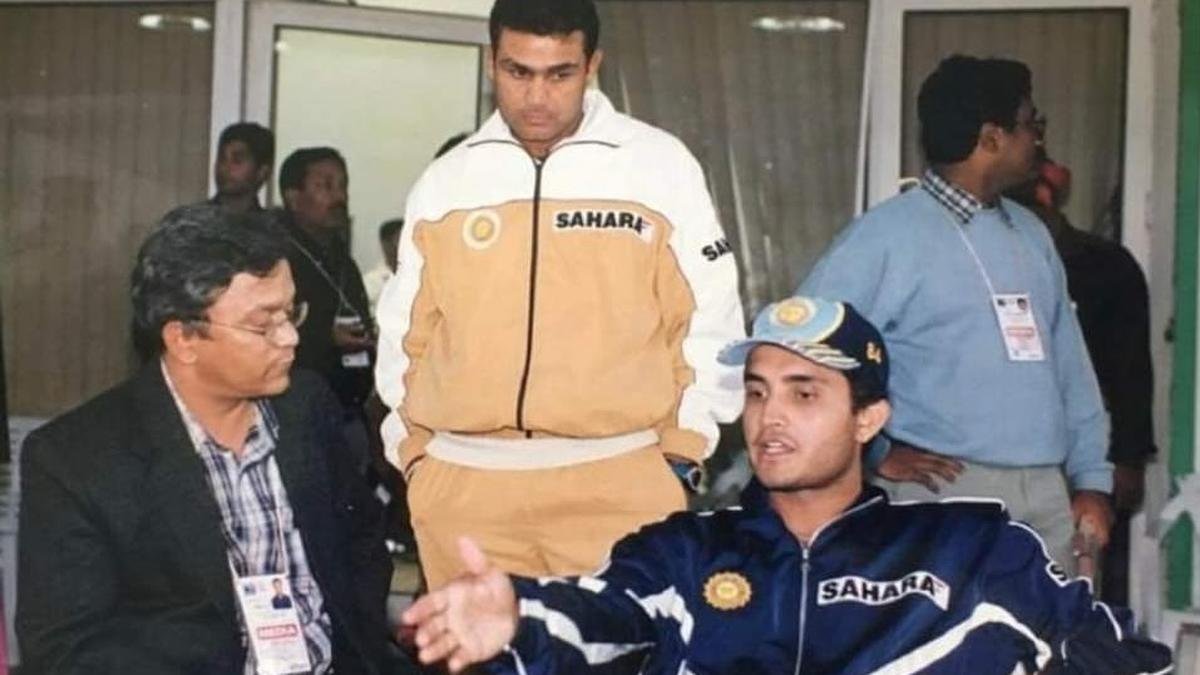
I went down from the press box to the Indian dressing room, which was in the old pavilion on the ground floor. Sourav was there, and team manager Chetan Chauhan was around, too. I explained that we needed just 15 to 20 minutes with him. Sourav said it would be better after lunch. It’d happen on day three when Sachin Tendulkar and Rahul Dravid were having a long partnership. I went back to the press box and told Joe we had been given 15 minutes after the break. He was delighted. I had a few questions of my own as well.
When we went down again, the team was sitting and watching the game. Sourav suggested that we move to a corner of the dressing room. So the three of us went inside. Joe asked his questions, and I asked mine. We had some privacy, and the interview lasted almost half an hour rather than the 15 minutes we had been promised. The match was in progress, and players kept coming and going. It was unusual, to say the least. People may find it hard to believe, but Joe, Sourav and I were the only three involved in that interview. Joe can testify to how it happened.
I had interviewed players such as Mohammad Azharuddin and Navjot Singh Sidhu in dressing rooms on other occasions, in connection with their columns, which I ghostwrote, usually after a match. Sometimes, they would ask me to come in, and I would quickly take down the points and leave. The dressing room was meant for players, but this interview with Sourav took place in the middle of a Test match. That made it different. Sourav was a delightfully accommodating captain. He would find time for you, even when circumstances were not ideal.
Sachin Tendulkar: On the way to the airport

Sachin Tendulkar turned an airport transfer into an interview I will always remember. We spoke in Marathi, away from the usual crowds and interruptions.

Sachin Tendulkar turned an airport transfer into an interview I will always remember. We spoke in Marathi, away from the usual crowds and interruptions.
Whenever our organisation wanted a big interview, I would approach Sachin Tendulkar. He never disappointed me and never said `no.’ On one occasion, Sachin was coming to Delhi to play a benefit match [26 April, 2005] for Gursharan Singh at the Ferozeshah Kotla. He had promised Gursharan that he would play his benefit match. Gursharan once came out to bat with a bandaged hand to help Sachin complete his hundred, with the latter needing 11 runs. That was during a Rest of India match in the Irani Cup [in November 1989].
I told Gursharan that I had to interview Sachin and needed space in the dressing room. As usual, I went to the dressing room, but it was crowded with people (players and organisers) coming in and out. Sachin had said he would bat first and then catch a flight to Mumbai. I was wondering how I would manage the interview. I had promised Nirmal Shekar, the then The Hindu sports editor, a big Sachin Tendulkar story.
I explained the problem to Sachin. He asked me if I was going to stay there the whole time. I told him I had come only to meet him for the interview. He then said, “You come with me to the airport.” I agreed. We travelled from the Ferozeshah Kotla to Palam airport. I will never forget how the driver struggled to reverse the car inside the stadium. Someone accompanying Sachin was sitting in the front, and Sachin himself guided the driver as he manoeuvred the large car.
Once we came out, the driver began speeding near ITO. Sachin told him, “Look, we’re not in a hurry. He’ll interview me now. We don’t have to reach the airport for at least an hour.” Then Sachin suggested that we speak in Marathi because the person sitting in front would not understand. That was how we conducted the interview. He spoke in English too but switched to Marathi for some of the more sensitive points. Fortunately, I had brought a recorder. Taking notes in a moving car would have been difficult. It turned out to be a very good interview. “I would love to drive on Delhi roads,” Sachin had remarked.
When we reached the airport, Sachin thanked me for ‘seeing him off’. I told him I would happily see him off every time he came to Delhi if it meant travelling with him and getting an interview.
Zaheer Khan: A private conversation on the road
I remember another good car interview, this time with Zaheer Khan in Delhi, with Ashish Nehra driving. The idea was to speak in the car, away from people who might interrupt us. We would have some privacy, and I thought it was a good arrangement. Ashish drove around Lutyens’ Delhi and the Diplomatic Zone in Chanakyapuri for almost 45 minutes while we conducted the interview. It was just the three of us, and it worked well.
There was another interview I remember, with Ishant Sharma. I went to the ground where he was practising. He had asked me to meet him at Ramjas School, where he was training with his childhood coach, Sharvan Kumar. There were fans and students around, making it difficult to conduct the interview. I suggested that we do it in the car. Ishant agreed, and we drove around while I asked my questions.
What I remember most is that the car was not very big, and Ishant is a tall man. He had adjusted the seat so that it moved back, allowing him to drive with his legs stretched out. I asked whether he was comfortable, and he said he had adjusted the seat accordingly. A few months later, he bought a bigger car, which seemed more suited to his stature as a rising Indian cricket star.
The funny part was that I would ask questions while looking ahead, and he would answer while looking ahead because he had to keep his eyes on the road. It was a crowded part of West Delhi, so he had to concentrate on driving. It remains a memorable interview.
Sachin Tendulkar and Ajay Jadeja: A different kind of press conference

A memorable interaction with Sachin Tendulkar and Ajay Jadeja in Bulawayo in 1998, when I had the privilege of sharing the frame with two of India’s finest cricketers.
| Photo Credit:
Special arrangement
A memorable interaction with Sachin Tendulkar and Ajay Jadeja in Bulawayo in 1998, when I had the privilege of sharing the frame with two of India’s finest cricketers.
| Photo Credit:
Special arrangement
I remember a photograph of myself with Sachin Tendulkar and Ajay Jadeja at an interaction before the match in Bulawayo in 1998 when he flew in from Toronto. Today, entry to a pre-match press conference or individual interaction is restricted, and there may be hundreds of accredited journalists. But there I was, standing alongside Tendulkar and Jadeja. It was a good ‘press conference’, and the match was the following day, against Zimbabwe. Just the three of us.
Sourav Ganguly: A conversation on the team bus
I also remember a bus interview with Sourav Ganguly in 1996, after the Test series in England. We had two matches to play in the Netherlands. I was travelling with my photographer colleague V.V. Krishnan along with the team. Sandeep Patil, the coach, knew we were booked at the team hotel and invited us to join the bus from Amsterdam to The Hague. I said we would take a cab, but he said it was fine to travel with them. The team had a bus carrying its luggage. VVK and I travelled with them. Sourav and I sat at the front. I told him we should talk, and he spoke a little about the England series. That was how we got the interview. Looking back, it seems strange that we had that kind of access to these players. Sometimes, I feel it was a dream. I wonder whether it really happened or whether I am imagining it.
Relations between players and the media were cordial most of the time. There was an exhibition match at the ground in Galle, and my friend (late Kolkata journalist Partha Rudra) and I were looking for a cab outside the stadium. Suddenly, the team bus stopped, and we were invited to join the journey to Colombo, courtesy of the tour manager, Prof. Ratnakar Shetty. There are many things I have seen that have stayed with me. Some things will never come out. The players had faith in us, and we respected that trust.
On another occasion, at the airport after the 1996 England tour, I told Sachin that he was going to be made captain. He did not believe me at first. I asked him whether he would accept the job, and he said he was ready. I turned that conversation into a story, hinting that Azharuddin was being eased out and Sachin was ready to take over as captain. When the team returned, Sachin was appointed captain for the Singer World Series.
Mohammad Azharuddin: Under a tree at Palam
I once interviewed Azharuddin while standing under a tree at Palam. The team was leaving for the UAE to play in Sharjah, and I needed to speak to him. Anshuman Gaekwad was the coach. I told him I had to get the interview, and he agreed, asking us to move away from the nets and conduct it elsewhere. So Azhar and I stood under a tree and spoke. It was an unusual setting for an interview with the captain of the Indian team.
Alan Lamb: A recommendation from Anil Kumble and Sunil Gavaskar

Anil Kumble put in a word, and Sunil Gavaskar vouched for me. That was how I secured an interview with Alan Lamb in England for Sportstar.
Anil Kumble put in a word, and Sunil Gavaskar vouched for me. That was how I secured an interview with Alan Lamb in England for Sportstar.
I also remember interviewing Alan Lamb in England. He was reluctant to speak to journalists, and I was told he would not entertain interview requests. Anil Kumble put in a word for me, and as I was about to start the interview, Sunil Gavaskar joined and told Lamb, “I vouch for him.” That was how I managed to get the Alan Lamb interview for Sportstar.
Shane Warne in Sharjah
Kumble was a huge help again in 1998 in Sharjah when he organised my exclusive interaction with Shane Warne. We were to speak at breakfast, in the presence of Kumble, but Warne put it off, saying “we will talk at he ground when we bat.” I lost hope. Australia batted first. I prayed for Warne to remember. At the end of the fifth-sixth over, he came looking for me. He took the extreme right seat in the front row of the players’ gallery, and I the extreme left seat in the press gallery. This was some interview. The entire media watched me conduct the interview with the match in front of us. It was incredible, and I must thank Kumble for putting in a word and Warne for honouring the promise to speak at the ground. India lost the match, interrupted by a sandstorm, but qualified for the final. A day later, Australia lost to Tendulkar.

The Sharjah press box. I am in the media gallery and Anil Kumble in the players’ gallery. The railing is all that separated the media and the players.
| Photo Credit:
Special arrangement
The Sharjah press box. I am in the media gallery and Anil Kumble in the players’ gallery. The railing is all that separated the media and the players.
| Photo Credit:
Special arrangement
Virender Sehwag and Ashish Nehra: A long drive to the Kotla
I once went to Ashish Nehra’s house in South Delhi for lunch. Ajay Jadeja was also there. They were heading to the Ferozeshah Kotla afterwards, and I wanted to speak to them. Virender Sehwag was to join us after lunch and suggested that I accompany them. My office was in that area, so I went along. When they were growing up, Sehwag had a scooter and would pick up Nehra on the way to the ground. Nehra would sit on the pillion with his kit bag while Sehwag drove. I reminded Nehra that he had progressed from travelling to the Kotla on a scooter to riding in a luxurious car. He agreed, but pointed out that the driver was still the same! Sehwag had driven the scooter, and now he was driving the car while Nehra sat beside him! I conducted a curtain-raiser-style interview with them during the drive. It took us more than an hour to reach the Kotla because of the traffic, so we had plenty of time to talk.
Graeme Pollock: An interview in Johannesburg

I travelled to Johannesburg to meet Graeme Pollock, a legend I had long admired. Finding him and securing that interview remains one of my most satisfying journalistic memories.
I travelled to Johannesburg to meet Graeme Pollock, a legend I had long admired. Finding him and securing that interview remains one of my most satisfying journalistic memories.
One of the interviews I am particularly proud of was with Graeme Pollock. During the 1992-93 tour of South Africa, I was told he was in Johannesburg and difficult to approach. He was something of a recluse. I was determined to speak to him. I got his address from the local association and went there without informing him in advance. I introduced myself, told him who I was and explained how much I had read about him. I spent a long time interviewing Pollock. Getting to speak to him before others could was a satisfying experience. I filed the interview for the daily newspaper and the magazine. It is one of those interviews I still relish and feel proud of.
Ian Redpath: A childhood memory comes full circle

Finally, there was Ian Redpath. My first Test match was India versus Australia at the Ferozeshah Kotla in 1969. I was 10 years old, and my mother had gifted me a ticket to the match. Years later, on my first tour to Australia in 1999-00, I learnt that Redpath lived outside Melbourne and had a studio and shop. He was not known for entertaining journalists, but I was determined to meet him.

I watched Ian Redpath play in my first Test match as a 10-year-old. Decades later, I travelled to meet him in Australia and interview the cricketer who had been part of that childhood memory.
| Photo Credit:
THE HINDU ARCHIVES
I watched Ian Redpath play in my first Test match as a 10-year-old. Decades later, I travelled to meet him in Australia and interview the cricketer who had been part of that childhood memory.
| Photo Credit:
THE HINDU ARCHIVES
A cousin of V.V.K. offered to drive 80 kilometres outside Melbourne. Before setting off, I called him on the number I had for his studio and shop. I told him that my first Test match had been the one in which he played at the Feroz Shah Kotla. He remembered the match and agreed to see me. We made the journey, and I interviewed him for Sportstar. V.V.K. took some good photographs of Redpath at his shop and studio. That interview gave me a lot of satisfaction. I had watched him play as a 10-year-old and later had the opportunity to sit down with him for an interview.
There were many other interviews, but these are the ones I remember most. Looking back, it was remarkable how accessible some of these players were. They did not dismiss us with a few straightforward answers and end the conversation. They engaged with us and gave us enough time to write good stories and build trust over the years.
Published on Oct 09, 2026