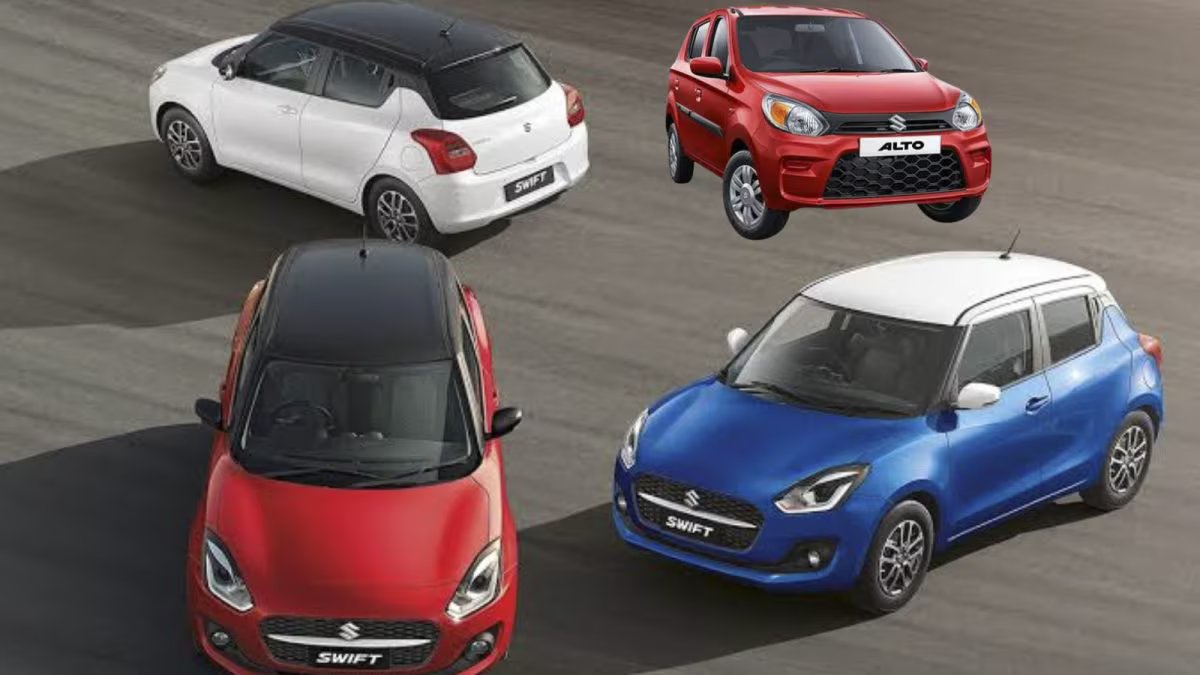
New Delhi. There has been a strong increase in the sales of Sports Utility Vehicles (SUV) in the country for some time now. Due to this change, a perception has started forming in the auto world that the era of hatchbacks and small cars is about to end in the country. But RC Bhargava, chairman of the country’s largest car manufacturer Maruti Suzuki India, does not believe so. Announcing the results of the company’s second quarter (Q2 FY27) of the financial year 2026-27, he said that India is not just a market for SUVs. The surge in demand for this segment after the Goods and Services Tax (GST) reform proves that there is still a big market for small cars in India.



RC Bhargava said that in the first half of the current financial year itself, Maruti has sold about 3.98 lakh small cars. He said that for the last two-three years many analysts were claiming that every customer would buy only expensive SUVs with modern features, but the demand of lower middle class customers has proved these claims wrong.
Strong jump of 36% in sales of small cars
In the quarter from July to September 2026, Maruti’s small car sales registered a huge growth of 35.9% on an annual basis. Although the SUV segment grew at the rate of 68.2% during the same period, the volume growth of small cars proves that this market has not weakened. Bhargava expressed confidence in the sustainable future of small cars despite the expansion of the Indian economy and the changing aspirations of the people. He said, “I am confident that even by 2047, when India becomes a developed country, there will still be a large and strong market for small cars.”
GST reform became a turning point
According to Bhargava, the GST reforms implemented in September 2025 have given new energy to the automobile sector. The company recorded sales of a record 6.97 lakh units in the second quarter of the financial year 2026-27, which is 26.5% higher on an annual basis. At the same time, total sales of the first half increased by 27.9% to 13.79 lakh units. The demand situation is such that despite increasing the production capacity, the supply at the dealerships is falling short. By the end of September, bookings for about 2 lakh cars were pending and dealers had only 17 days of stock left.
Bhargava said that the demand for cars is not limited only to metro cities, but the pace of development in rural areas remains slightly faster than cities. To strengthen its reach to every corner of the country, Maruti Suzuki is expanding its Arena and Nexa retail network. The number of service touchpoints of the company has crossed 5,000.
Maruti’s profit decreased
Maruti’s net sales rose 26.1% to ₹50,615.5 crore in Q2 FY27, but standalone net profit declined 26.9% to ₹2,414.9 crore. The main reasons for the decline in profit were geopolitical tensions in West Asia, increased cost of raw materials, loss in foreign exchange and mark-to-market losses. Even after the crisis in West Asia, the company is confident of surpassing last year’s total export figure of 4.44 lakh vehicles in the financial year 2026-27. Maruti exports cars from India to about 120 countries.