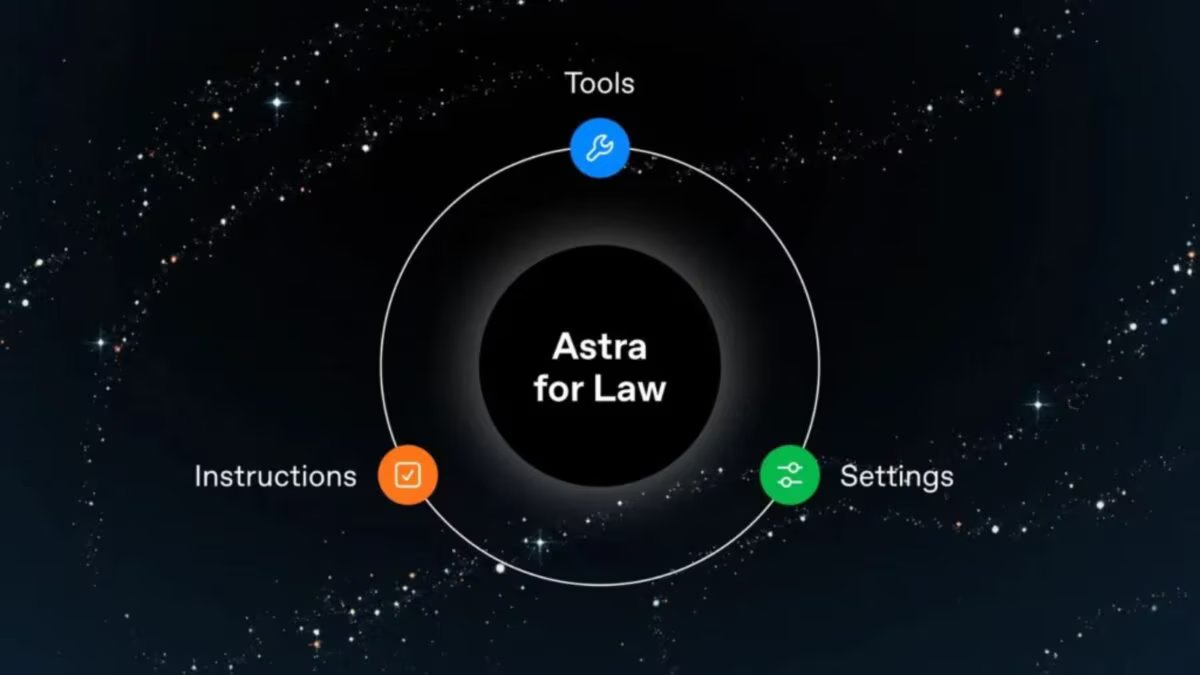
OpenAI has launched Astra for Law, a special AI platform for lawyers and law firms. This will help in tasks like legal research, finding case law, reading documents and preparing legal drafts. But currently its legal search index is based on American laws. Therefore, Indian lawyers will not be able to use it right now. But experts say that in future the company can use it for India.



Till now, lawyers have been using AI for general research, preparing documents and gathering information. But OpenAI has prepared Astra for Law especially for legal work. A large database of American case law, laws, regulations, court rules and administrative decisions has been added to it. That means lawyers will be able to use a special legal search layer instead of normal web search while researching any legal question.
One more question: AI will put forward case law
According to OpenAI, Astra for Law’s Legal Search Index can search more than 230 million pages of US legal records. New documents are also continuously added to it. Over 99.9% of US presidential case law published through partnership with the Free Law Project, which runs CourtListener Part is also included in the research experience.
From drafting to finding weaknesses in the case
Astra for Law is not limited to just searching for law. According to OpenAI, it can be used for case research, structuring arguments, drafting legal terms, evaluating documents, and identifying potential weaknesses in a case. That is, in the work in which lawyers have to spend hours sifting through documents and old decisions, AI can reduce the initial research and preparation time.
Can Indian lawyers take advantage of this?
At present its direct benefit will be limited. The reason is that the availability of Astra for Law and its legal search index is currently focused on the US market and US law. Therefore, if an Indian lawyer wants to do research on Indian Supreme Court or High Court decisions, Indian laws and Indian regulations, he will not get the same level of benefit from this American Legal Index.
For example, if an Indian lawyer has to research on IPC/BNS, CrPC/BNSS, Indian Evidence Law, Supreme Court decisions or local law of any state, then only the index of American case law will not be sufficient for him. However, general AI capabilities can be used in different ways for tasks such as understanding documents, summarizing, drafting and organizing ideas.
The real benefit will be when Indian law is also included
Its widespread use in India will be possible when OpenAI or any other service makes Indian judicial and legal databases available in a similarly structured manner. The number of laws and decisions in India is very large and there are also documents from different courts, states and regulatory bodies. Therefore, what would be more useful for Indian lawyers than just a simple AI model would be a reliable legal search system based on Indian law and case law.
No AI in place of lawyer, but definitely research assistant
Another important thing is that considering AI’s answer as the final legal opinion can be risky. OpenAI itself says that lawyers should check the model’s answers and the sources it provides. That means AI can help in researching and drafting the case, but the final legal decision and responsibility will remain with the lawyer.
Google and Anthropic also in the field
The market for legal AI is now becoming increasingly competitive. Anthropic and Google are also developing AI tools for lawyers. Thomas Reuters has also introduced an AI model based on its legal research content. OpenAI has said it will work with legal AI platforms like Harvey and Legora, and has also released integrations for legal software like Relativity, Clio, iManage, and DeepJudge.