The aim of bringing long-lost creatures back from the dead has jumped from the silver screen into modern laboratories. Through advanced artificial intelligence (AI) models, CRISPR gene editing and ancient DNA extraction, Texas-based biotechnology firm Colossal Biosciences is actively working to resurrect extinct beasts, including ancient dire wolves and woolly mammoths, drawing frequent comparisons to Jurassic Park. Speaking with CNBC, Colossal CEO and co-founder Ben Lamm embraced the Hollywood comparisons with a touch of humour, but was quick to draw a firm line between cinema and science.“I think anyone that saw Jurassic Park in the 90s and didn’t say it was cool, like I don’t think they’re probably very fun at parties,” Lamm joked, adding, “But yes, I saw the movies. I love them. They entertained us. They scared us. I constantly have to remind people on X that, you know, they were movies. I don’t think Jurassic Park had any conservation or general human benefit models to it, so we’ve tried to take a slightly different perspective.”Since viable dinosaur DNA degrades and cannot survive across tens of millions of years, reviving dinosaurs remains physically impossible. However, Colossal has set its sights on species lost to more recent history, including the dire wolf, the woolly mammoth, the dodo bird, the Tasmanian tiger, and the giant New Zealand moa bird.“It’s highly likely in the next coming year or two, people will continue to see us deliver extinct species back to Earth, and we could even have more dire wolves, too,” Lamm noted.



How AI reconstructed extinct wolf genome
To engineer its first generation of dire wolf pups, scientists extracted fragmented genetic material from a fossilised skull and tooth dating back thousands of years. Since ancient DNA is naturally fractured and degraded, Colossal deployed advanced AI models to piece together the broken sequence, successfully reconstructing the complete dire wolf genome. Scientists then mapped the computational blueprint against the genetic code of the gray wolf, the animal’s closest living relative.From there, researchers edited living cells from modern gray wolves to generate viable embryos. Three pups, named Romulus, Remus and Khaleesi, were carried and delivered by domestic dogs serving as surrogate mothers. Born on October 1, 2024, in North Texas, Romulus and Remus represent the first successful lineage bred from DNA fossils of an animal that vanished more than 12,500 years ago.When critics argue that the pups are technically genetically modified gray wolves rather than authentic dire wolves, Lamm dismissed the debate as a semantic distraction.“Gray wolves are just genetically modified dire wolves. They were just done by nature or God or however you want to classify it,” Lamm said, calling the objection an argument that “misses the forest for the trees.”
Engineering Woolly Mammoths for ecological restoration
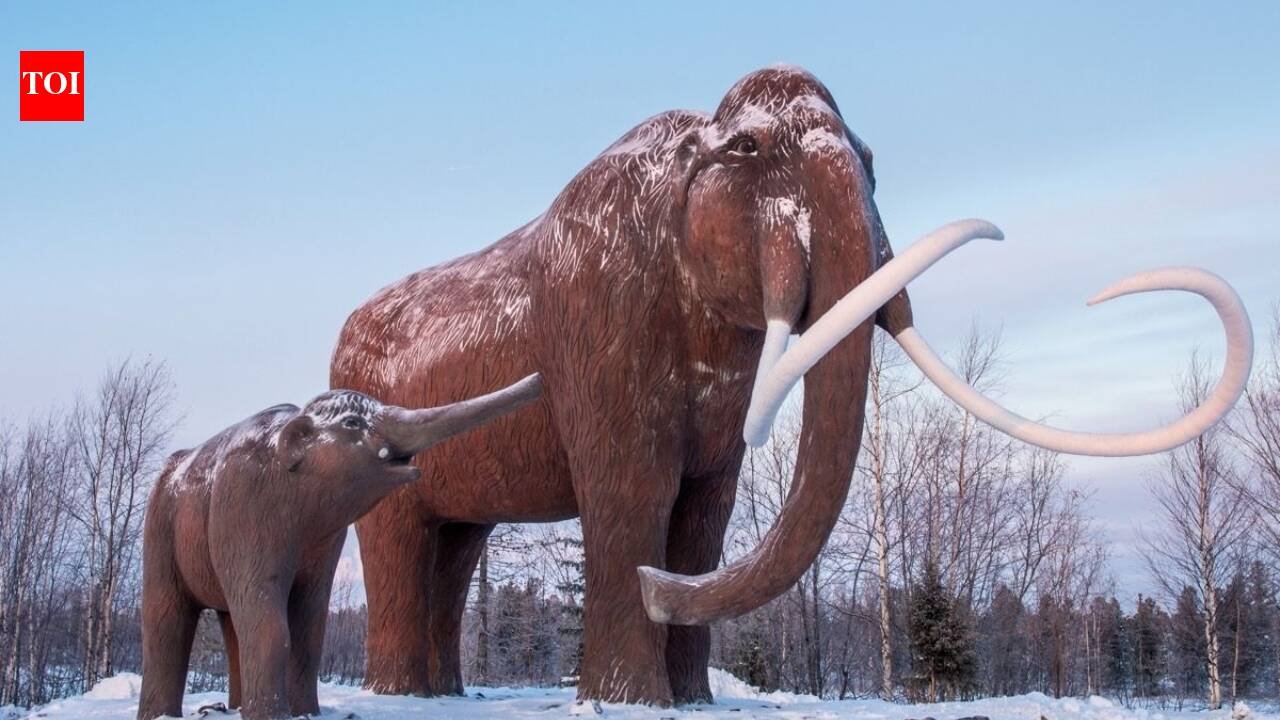
Colossal is applying a parallel approach to its high-profile woolly mammoth project, which involves inserting mammoth cold-weather traits into the cells of modern Asian elephants. The company is targeting its first mammoth birth sometime in the 2030s.“We call it a woolly mammoth. Because if it looks like a duck, it quacks like a duck, it serves ecological functions of a duck, it’s a duck, in our perspective,” Lamm said.The initiative traces back to 2019, when Lamm met renowned Harvard geneticist George Church, widely considered the father of synthetic biology. Church had long envisioned using CRISPR to bring back extinct fauna as a proving ground for human medicine and programmable biology.Beyond curiosity, Lamm points to direct climate benefits. First of those is Arctic Permafrost Preservation wherein herds of heavy mammoths could compact dense snow blankets across high-latitude Arctic zones, allowing freezing air to penetrate deep into the ground and keeping permafrost locked solid.Secondly, by felling trees and trampling shrubs, the animals could help transform heat-absorbing forests back into reflective tundra grasslands.