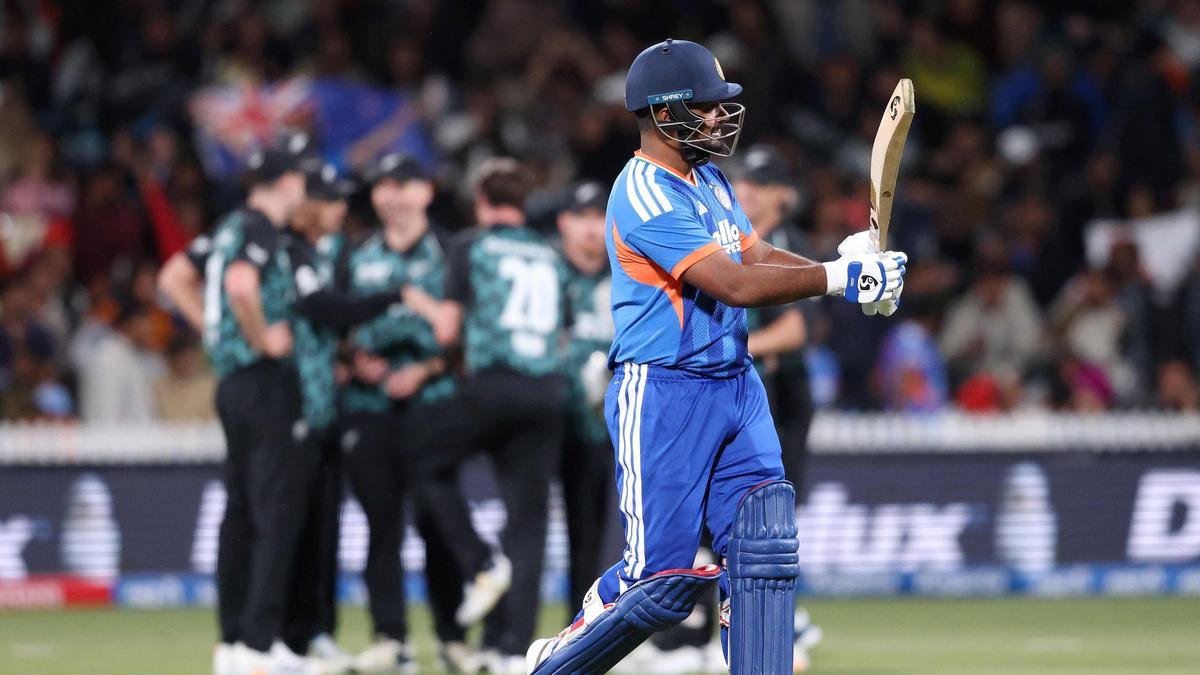
With India having wrapped up the T20I series against New Zealand by the third match itself, the remaining two matches were more of academic interest. This is not to make an excuse for the Indian team’s defeats in both these matches. It is simply to state that once the series is decided, the cutting-edge intensity can dip a bit. When that happens, there’s little chance of coming back from a tough situation in the ultra-short format. The Indian batting did that in the first two games, when it recovered from a poor start and a mid-innings wobble to go on to complete a good win. The third game became a no-contest even before the batting PowerPlay was completed, as both the openers, Abhishek Sharma and Vaibhav Sooryavanshi, toyed with the Kiwi bowling to chase down a near-200 target with overs to spare.



To the credit of the Kiwis, instead of being demoralised and dejected, they came roaring back in the fourth game to post a huge total of 259. They then ran through a listless-looking Indian batting lineup to win by a huge margin. Buoyed by this win, they went into the final game and showed their bowlers had learnt from the earlier games. They bowled a more short-of-length line that made it difficult for the batters to play the rising ball, committed as they are on the front foot. The wide, feet-splayed stance works well where there’s not much bounce in the pitch, as it’s easier to get onto the front foot but much harder to go onto the back foot. With the next ICC ODI World Cup in South Africa, where the pitches are hard and the ball bounces a lot more, the batters won’t find it easy. Of course, the silly interpretation that calls a short ball barely going above the batter’s head a wide means that bowlers won’t try banging the ball mid-pitch too much. That might suit the batters more.
Right through the five-match series, the Indian bowlers came in for a bit of caning. That, of course, is the nature of the T20 format, and bowlers are carted all over the ground by batters with big bats on small grounds. Still, the inability to consistently bowl the yorker, especially in the slog overs, was a bit of a downer. Even worse were the no-balls being bowled by both teams. Players have the standard line that they follow the process and do what is in their control. Well, not bowling no-balls is most definitely in their control. Today, with tape measures and all kinds of video analysis, this is the easiest thing to accomplish. There is no great disadvantage in bowling from behind the popping crease. If anything, the no-ball law needs to be changed from overstepping the batting crease to not touching that crease. This would ensure that bowlers release the ball from around 21 yards, not the 20 yards they bowl from today. More on this another time.
Time now for the ODI series, where all eyes will be on two of the game’s greatest batters – Rohit Sharma and Virat Kohli. Not just Indian fans but even die-hard New Zealand fans will be hoping their last trip to New Zealand is full of breathtaking shots, like the sparklers of Diwali.
Happy, healthy and peaceful Diwali to all.
Published on Nov 04, 2026