A NEW molecular diagnostic method could significantly reduce the time required to detect faecal contamination in drinking water, according to research demonstrating that intestinal enterococci can be identified within just 3–4 hours.



The real-time reverse transcription polymerase chain reaction (RT-PCR) assay demonstrated a sensitivity of 94.6%, compared with 89.2% for conventional culture methods, which typically require 24–48 hours. The findings suggest that rapid molecular testing could support earlier identification of potential contamination events and improve public health protection.
Improving Detection of Drinking Water Contamination
Intestinal enterococci are widely used as indicators of faecal contamination in drinking water, helping water utilities assess microbiological safety and identify potential risks to consumers.
However, conventional culture-based detection methods require approximately 24–48 hours to produce results, potentially delaying responses to contamination events.
To address this limitation, researchers developed a real-time RT-PCR assay targeting bacterial 16S ribosomal RNA (rRNA), enabling rapid detection of intestinal enterococci.
The method was designed to identify ten Enterococcus species selected for their prevalence in human and animal faeces and drinking water samples.
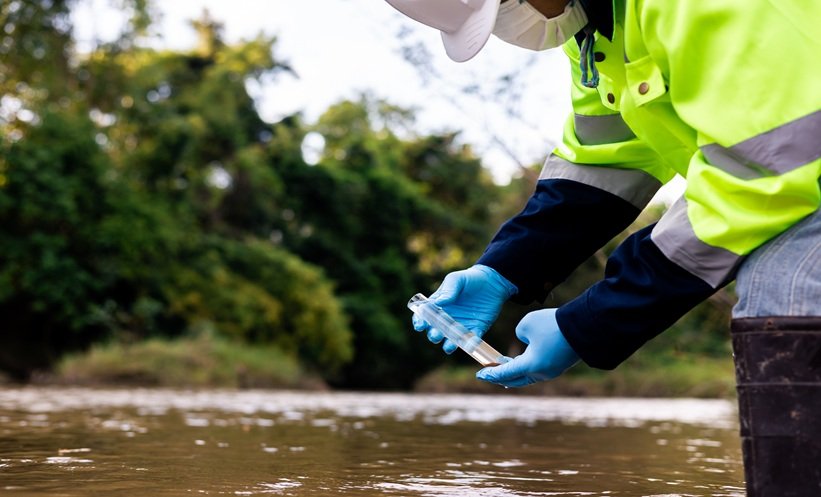
Researchers processed 100 mL drinking water samples through filtration, followed by lysozyme treatment, RNA extraction, and one-step real-time RT-PCR.
The assay was validated according to ISO 16140-2:2016 standards, using the established ISO 7899-2:2000 culture method as a reference. Validation included artificially contaminated drinking water, uncontaminated samples, and an interlaboratory study.
Molecular Testing Demonstrates High Sensitivity
The RT-PCR method achieved a sensitivity of 94.6%, slightly exceeding the 89.2% sensitivity reported for the reference culture method.
The combined relative limit of detection (RLOD) was 0.851, indicating broadly comparable detection capabilities between the two approaches, with slightly improved sensitivity for Enterococcus faecium using RT-PCR.
Inclusivity testing confirmed that the molecular assay successfully detected all ten targeted Enterococcus species.
Importantly, exclusivity testing demonstrated no cross-reactivity with non-target bacteria, supporting the specificity of the assay.
Interlaboratory validation also confirmed consistent performance across participating laboratories, suggesting that the method could be reproducible beyond a single testing facility.
Faster Results Following Water Network Repairs
Researchers additionally evaluated the assay using drinking water samples collected following repairs to distribution networks, a setting in which timely microbiological monitoring is particularly important.
The RT-PCR and conventional culture methods demonstrated 91.8% agreement, indicating substantial consistency between the two approaches.
However, RT-PCR detected intestinal enterococci more frequently than the reference culture method, suggesting that molecular testing may identify additional positive samples.
The most significant advantage was the reduction in testing time. While conventional culture methods required 24–48 hours, the RT-PCR assay produced results within approximately 3–4 hours.
This shorter turnaround could allow drinking water utilities to investigate suspected faecal contamination more rapidly and make earlier decisions about additional sampling or protective measures.
Implications for Drinking Water Safety
The findings highlight the potential value of molecular diagnostics for improving the speed and efficiency of microbiological drinking water monitoring.
By combining high analytical sensitivity with a substantially shorter time-to-result, the RT-PCR assay could complement existing monitoring strategies, particularly when rapid information is needed following infrastructure repairs or suspected contamination events.
Nevertheless, detecting bacterial RNA does not necessarily establish that viable organisms are present. The implications of molecular-positive, culture-negative results therefore require careful interpretation, particularly when assessing potential health risks.
The researchers concluded that the validated assay demonstrated reliable performance comparable to conventional culture methods while substantially reducing detection time.
Its implementation could support faster operational responses to suspected contamination and strengthen drinking water safety monitoring, although practical integration into routine surveillance would require consideration of laboratory capacity and regulatory requirements.
Reference
Heijnen L et al. A 16S rRNA reverse transcriptase-PCR method for rapid detection of intestinal enterococci in distributed drinking water, Journal of Applied Microbiology, Volume 137, Issue 10, October 2026, lxag234,