For years, the Ranji Trophy had a familiar hierarchy. Mumbai set the benchmark, with Karnataka, Delhi, Bengal and Tamil Nadu among the main contenders.



Their strong grassroots structures made them formidable. That hierarchy, however, has shifted. Over the last decade, relatively low-key teams have not only challenged the traditional powers but have also won the title.
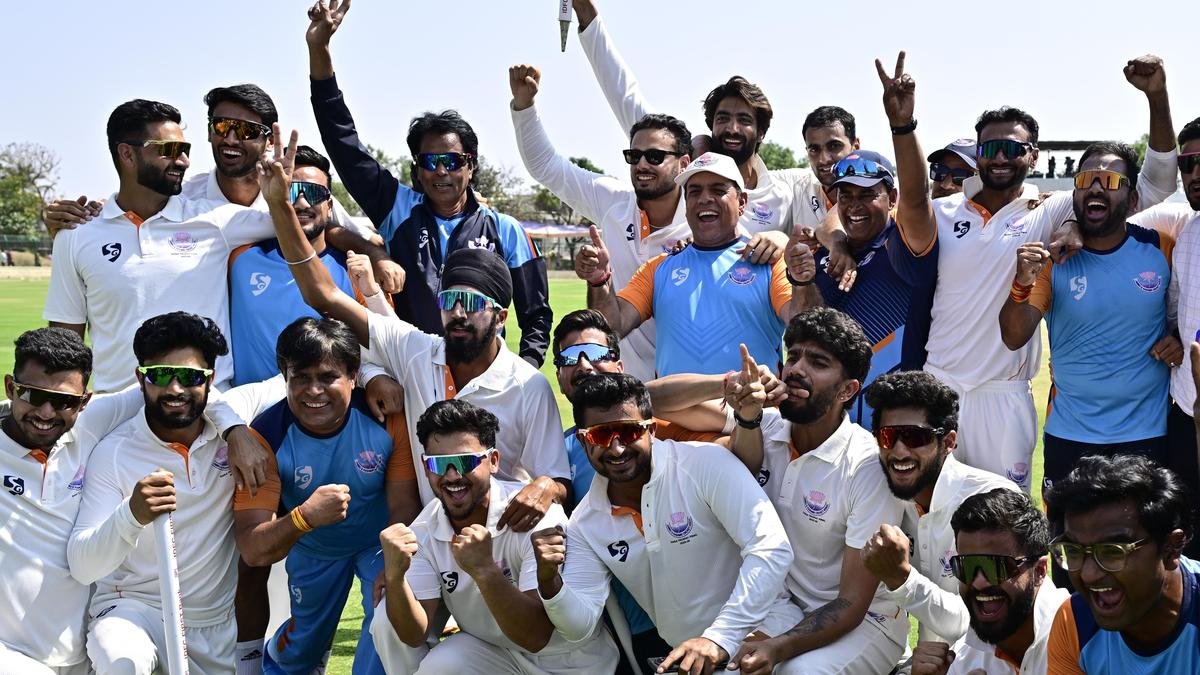
Since 2016-17, Mumbai is the only team from the old order to have lifted the Ranji Trophy. Vidarbha has won it three times, Saurashtra twice, while Gujarat, Madhya Pradesh and Jammu & Kashmir have each claimed the title once. The 2020-21 season was cancelled due to the COVID-19 pandemic.
The shift is striking given Mumbai’s record 42 titles. Karnataka last won the championship in 2014-15, while Bengal and Tamil Nadu have not lifted the trophy since 1989-90 and 1987-88, respectively. Delhi, too, has struggled to turn its history into recent success.
Vidarbha’s rise is perhaps the clearest example of the changing landscape. It won consecutive titles in 2017-18 and 2018-19 before adding a third in 2024-25. Saurashtra’s success, Madhya Pradesh’s breakthrough in 2021-22 and Jammu & Kashmir’s maiden title in 2025-26 have reinforced the sense that the competition is no longer the preserve of a handful of associations.
The change has been years in the making. Greater investment in infrastructure, coaching and grassroots cricket has helped more State associations build competitive teams. Chandrakant Pandit, who guided Vidarbha to its first two titles before leading Madhya Pradesh to the championship, credits the BCCI’s financial support and the efforts of State associations.

Chandrakanth Pandith led Madhya Pradesh to the Ranji Trophy title in 2021-22.
| Photo Credit:
K MURALI KUMAR

Chandrakanth Pandith led Madhya Pradesh to the Ranji Trophy title in 2021-22.
| Photo Credit:
K MURALI KUMAR
“First, we must give credit to the BCCI for providing sufficient funds for the development of cricket. Several associations have made good use of these funds to expand the game across their States,” Pandit told Sportstar.
“There are a lot of young players coming through with a positive attitude and confidence. Many State teams have strengthened their structures, organised more tournaments and provided players with opportunities to play different formats. This is one of the reasons why traditional powerhouses like Mumbai have faced greater competition,” he added.
Mumbai’s strength was built over generations. Tournaments such as the Kanga League, Harris Shield and Times Shield served as important stepping stones for young cricketers, helping produce stalwarts such as Sunil Gavaskar, Ravi Shastri, Dilip Vengsarkar and Sachin Tendulkar. A strong club structure and a steady calendar of competitive cricket gave Mumbai a deep pool of players to draw from.
That pathway is no longer unique to Mumbai. Several other State associations have strengthened their age-group structures, grassroots infrastructure and domestic competitions, allowing players to develop closer to home.
“The increase in the number of tournaments across associations has also played a major role. Players are now getting more opportunities to play domestic cricket, both at the State level and in tournaments organised by their associations. When they perform, they know there are further opportunities, including India A and Under-19 assignments. That makes them hungrier to perform,” Pandit said.
For Pandit, however, building a team means more than what happens on the field. He has introduced reading sessions, public speaking and mental conditioning across age groups in Madhya Pradesh, with a focus on preparing players for life beyond cricket as well.
“The idea is to focus on the overall development of players. Education is important, as are confidence and communication skills. Library sessions help players understand what is happening around the world and learn about those who have represented their State or country. Public speaking builds self-confidence and prepares them to face the media. That confidence also carries onto the field,” he said.
“Many players come from districts where their exposure is largely limited to cricket. They need opportunities to develop their communication skills and learn basic etiquette, including how to conduct themselves when travelling and staying with the team. Overall development goes beyond performance on the field and helps players become more confident individuals.”
Saurashtra captain Jaydev Unadkat believes the change began long before the recent rise of emerging teams. The development of grassroots infrastructure over the last two decades, he says, has allowed players from regions outside the traditional centres to find opportunities and recognition.
“For me, the main reason is the influx of talent into the system. If you look at the last 20 years, particularly the last 10, the results are there to see. But I think it started around 25 years ago, when different regions began developing infrastructure for grassroots cricket. Players like Dada (Sourav Ganguly) and M.S. (Dhoni) started emerging from regions beyond the traditional centres of Indian cricket, and that played a massive role in spreading the game across the country,” Unadkat said.

Jaydev Unadkat has over 500 First-Class wickets.
| Photo Credit:
Nirmal Harindran
Jaydev Unadkat has over 500 First-Class wickets.
| Photo Credit:
Nirmal Harindran
“We always had talent, but the infrastructure was not quite there. Once that fell into place, and with the IPL coming in, media coverage also increased, helping highlight talent from different parts of the country. It was no longer about being able to play cricket only if you came from a big centre or represented a big team. It is now about being a good player. If you are good enough, you can get your break from wherever you are,” added Unadkat, who has claimed more than 500 First-Class wickets.
The IPL has given players from less prominent associations greater visibility and opened another route to the higher levels of the game. Its demands differ from those of the Ranji Trophy, but the exposure has allowed young cricketers to test themselves against established players and see that opportunity is no longer confined to the traditional centres.
The change, Unadkat says, is also psychological. “The mindset has also changed. Earlier, there was a perception that Mumbai, Delhi or Karnataka were always the superpowers. But players from Rajkot or Jamnagar can now believe that they can compete at that level, that they have the firepower to do so, and they have proved it,” he said.
“If you look at the Indian team, a lot of players are now coming from different parts of the country. It is no longer just Mumbai, Delhi, Tamil Nadu or Karnataka. That also motivates others to look up to these players and try to do well for their States. The pool of teams that can win the Ranji Trophy has grown to around 12 or 14. It is no longer restricted to three or four teams.”
Vidarbha coach Usman Ghani points to Jammu and Kashmir as an example of how investment and better coaching have narrowed the gap between established and emerging teams.
ALSO READ: Mukesh, Akash hunt J&K in tandem, bowl RoI to Irani triumph
“Jammu and Kashmir is a good example of this transformation,” Ghani said. “Over the last decade, the gap between established teams and smaller States has narrowed, with talent and facilities becoming more evenly distributed. The BCCI’s coaching programmes have also played a key role. Coaches sent to the National Cricket Academy gain exposure to technical aspects as well as sports psychology and mindset, which they take back to their respective States. This has helped improve coaching standards across the country,” he added.
Ghani also cites Jharkhand’s Syed Mushtaq Ali Trophy triumph last year as evidence that the change is not confined to red-ball cricket. Better facilities, stronger coaching and more opportunities have helped emerging associations compete across formats.

Vidarbha won the Ranji Trophy for the third time in 2024-25.
| Photo Credit:
Nirmal Harindran
Vidarbha won the Ranji Trophy for the third time in 2024-25.
| Photo Credit:
Nirmal Harindran
Gujarat head coach Monty Desai, who has previously coached Nepal and Canada, believes established players in domestic cricket can help younger cricketers improve. “The BCCI’s decision to mandate the top players to play a few games also adds a boost, as the young players learn a lot from them,” Desai said.
The rise of new champions is only one part of the story. Sustaining it is another matter. Teams need to retain a settled core, manage the exit of senior players and prepare the next generation to take over. Saurashtra, which has seen senior players retire in recent seasons, is navigating that transition.
“We have gone through a transition, with a couple of senior players retiring over the last two seasons. But I still feel we have the firepower, and I would expect us to go all the way,” Unadkat said. “I want to win matches for my team and contribute by taking wickets, but also by leading the side and providing a pathway for the youngsters coming through the system. That is how you build a strong team, especially when you are going through a transition.”
The new season will offer another measure of how far the balance has shifted. R. Smaran, last season’s highest run-scorer, will lead Karnataka, while Vaibhav Sooryavanshi will be among the young batters to watch. Experienced campaigners such as Rishabh Pant, Siddhesh Lad, Mayank Agarwal, Karun Nair, Paras Dogra, Hanuma Vihari and Mohammed Shami will bring depth to the competition. Umesh Yadav, who has moved from Vidarbha to Punjab, and Auqib Nabi, rewarded for his consistent performances with an India debut, will also be in focus.
The Ranji Trophy’s shifting power equations are not necessarily a story of the old guard losing its relevance. They are, instead, a sign of how far Indian domestic cricket has travelled.
Published on Oct 10, 2026