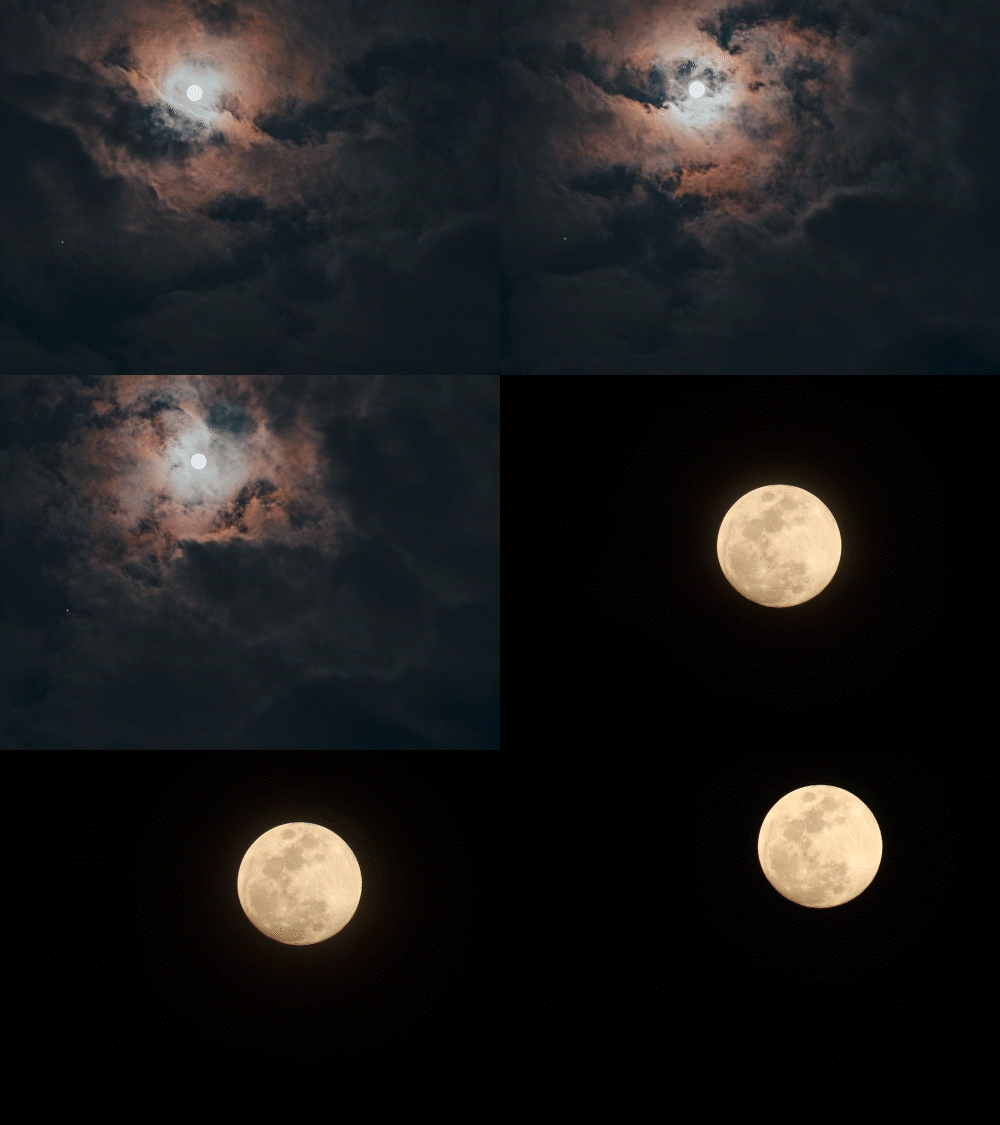
Ahmedabad2 hours agoAuthor: Sagar Sarthi Mohanbhai



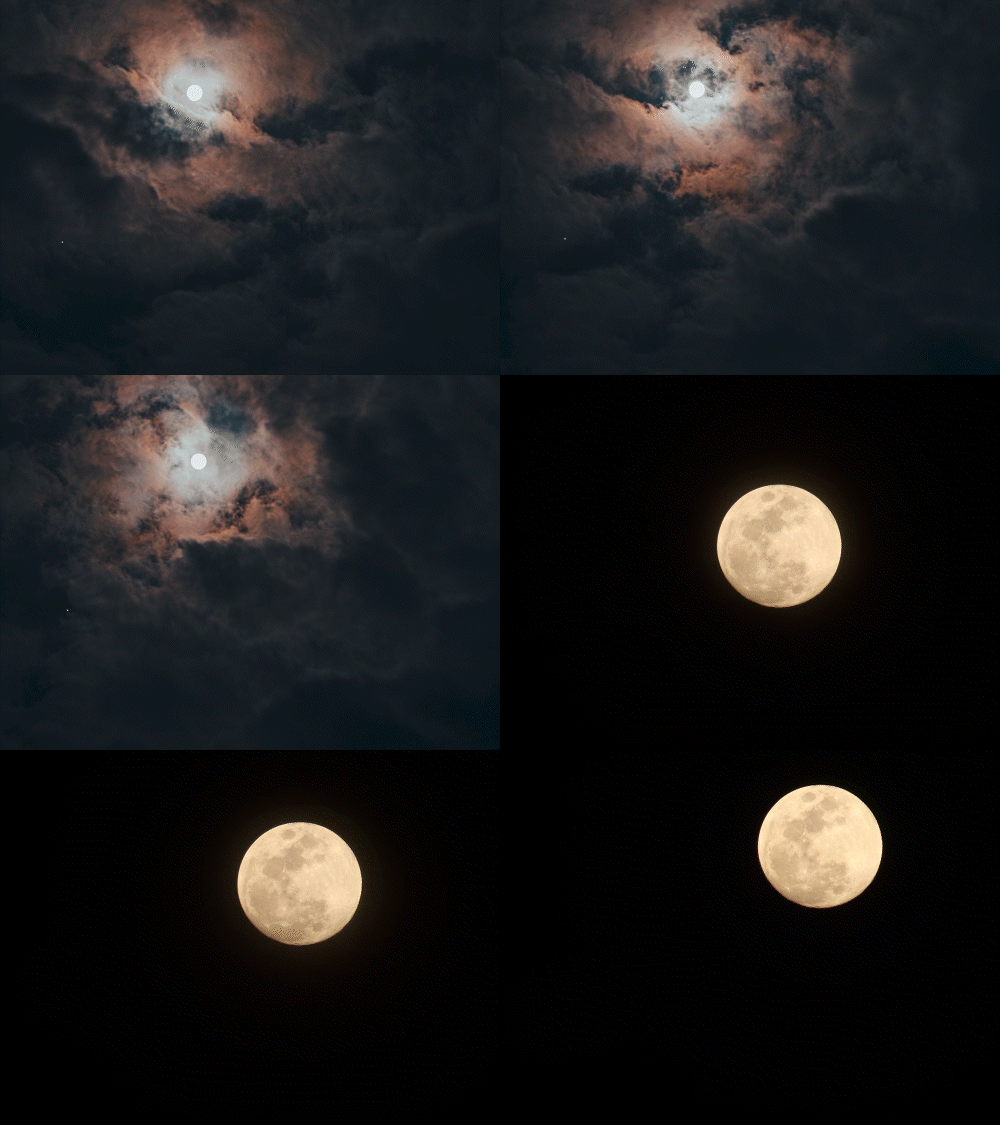
We have grown up listening to stories about ‘Uncle Moon’. But did you know that the Moon, which has accompanied Earth for millions of years, is gradually shrinking? This finding came to light just a few days ago.
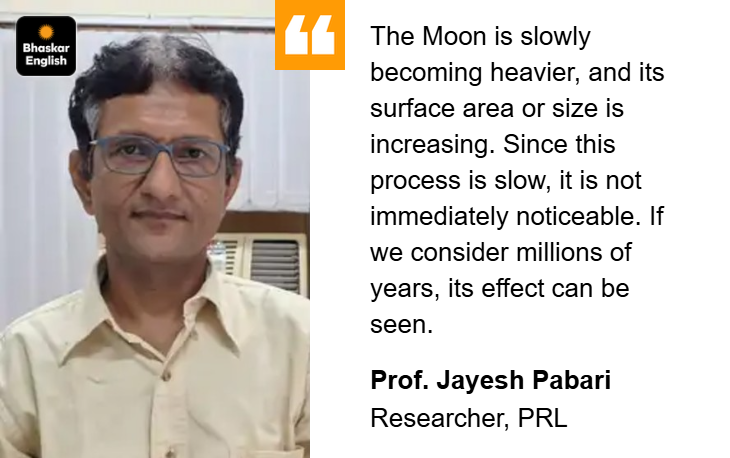
In an exclusive conversation with Divya Bhaskar, Professor Jayesh Pabari, a planetary science expert at Ahmedabad’s Physical Research Laboratory (PRL), shared fresh insights into the discovery. What is happening inside the Moon, and how could it affect human life? Here is a closer look.
What does the new report say about the Moon?
The Planetary Science Journal, a US-based scientific publication that features advanced research on planetary science and astronomy, has published a report stating that the Moon has shrunk by 148 feet over the past 400 million years. The findings have drawn scientists’ attention.
Cracks and ridges reveal changes on the Moon’s surface
Explaining the report, Professor Pabari said an analysis of satellite images had revealed that the Moon was gradually shrinking. Researchers identified small scarps, or cracks and ridges, on its surface.
Based on these observations, they concluded that the Moon had contracted by 42 to 46 metres over the past 400 million years, also known as 400 mega-years. This means that some parts of the Moon’s surface have risen slightly, while others have sunk.
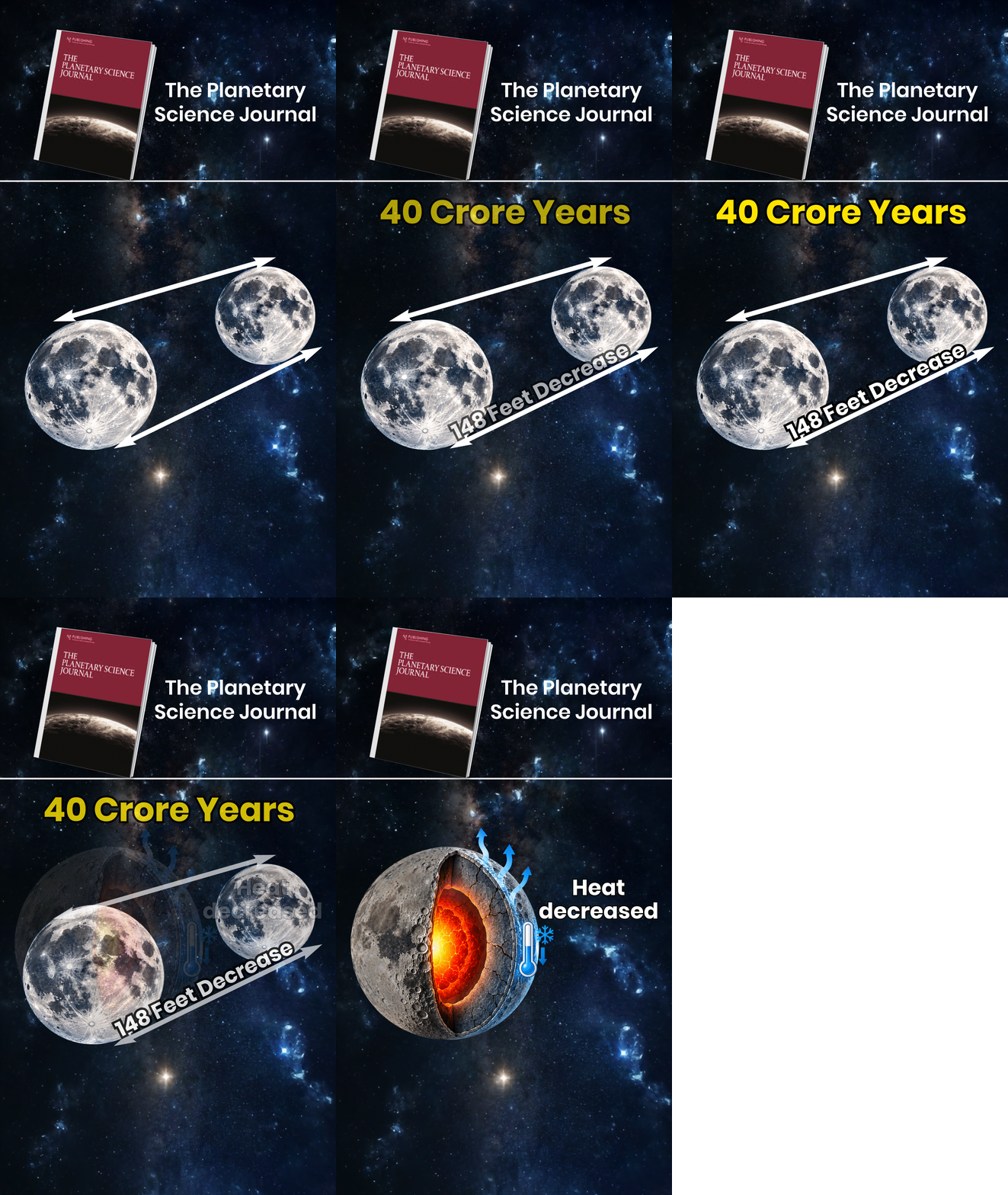
“The heat inside the Moon is decreasing, which means it is gradually cooling down. As a result, the Moon is slowly shrinking. However, its total mass remains unchanged; only its surface area is decreasing. This reduction in area could affect its density,” Professor Pabari explained.
The Moon’s contraction is caused by the gradual compression of the material on its surface, including soil and dust.
As the Moon cools, this material becomes more compact under pressure. The process is extremely slow, with the Moon shrinking at a rate of around 11 centimetres per million years.
Professor Pabari’s research reveals why the Moon is gaining weight
While the American journal published findings about the Moon’s shrinking size, Professor Pabari’s research has revealed another intriguing aspect: the Moon is also gradually gaining weight.
Interplanetary dust particles (IDPs), which are extremely fine solid particles floating in the space between planets in the Solar System, enter the Moon from outside.
Since the Moon has no atmosphere, these particles reach its surface directly and gradually accumulate there. Some particles occasionally escape from the lunar surface and continue into space.
Studies tracking the particles entering and leaving the Moon have found that more particles arrive from outside than escape. As a result, the Moon’s mass is gradually increasing. The incoming dust eventually forms a thin layer on its surface, although the process takes place very slowly.
Professor Pabari said he conducted research on this process in 2020 using impact theory. Through the study, his team reported the lunar escape process for the first time.
They found that dust particles, and sometimes even ice, escape from the Moon’s surface. They also examined the dust particles arriving from space.
Taken together, the findings suggest that the Moon is gradually shrinking as it cools, while its mass is increasing because more dust enters its surface than leaves it.
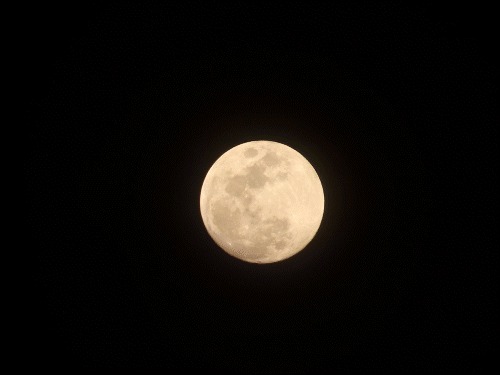
Research has found that although the Moon is gradually shrinking, there is no change in its mass
External dust impacts cause water ice to escape from the Moon
Explaining the impact of interplanetary dust particles (IDPs) on the Moon, Professor Pabari said these particles travel through space and strike the lunar surface.
The Moon’s North and South Poles have permanently shadowed regions (PSRs), where sunlight never reaches. These areas contain water ice.
When external dust particles hit these regions, they create an ejecta fountain, sending material flying away from the surface. During this process, some of the water ice escapes from the Moon and enters space.
“According to our estimates, around six kilograms of ice leaves the Moon and enters space every year. Since this process is extremely slow, the Moon’s water ice reserves could gradually decline and may eventually be depleted over a long period,” he said.
As part of their research, the team studied dust particles entering the Moon, particles escaping from its surface and the water ice being lost to space.
Water ice is considered an important resource for future lunar missions, as it could prove useful if a human colony is established on the Moon. Therefore, it is important to account for the gradual loss of this resource.
Will the Moon’s shrinking size affect human life?
Any effects of changes in the Moon’s size or mass may become noticeable only after millions of years. Professor Pabari said this timescale is extremely long compared with a human lifespan. Therefore, these changes will not have any immediate impact on people or their daily lives.
Why is this cooling process more active on Earth’s Moon?
Asked whether a similar process was taking place on other planets or their natural satellites, Professor Pabari said the Moon’s interior is gradually cooling, which is driving the contraction process.
In the case of other planets and moons, this cooling process has either already been completed or they are not as hot. As a result, this particular effect is currently more active on Earth’s Moon.
Professor Jayesh Pabari has been working in the Planetary Sciences Division at Ahmedabad’s Physical Research Laboratory (PRL) for the past 25 years.
His research focuses on planets orbiting the Sun and interplanetary dust particles in the Solar System. He also conducted research on a similar process involving the Moon around six years ago.