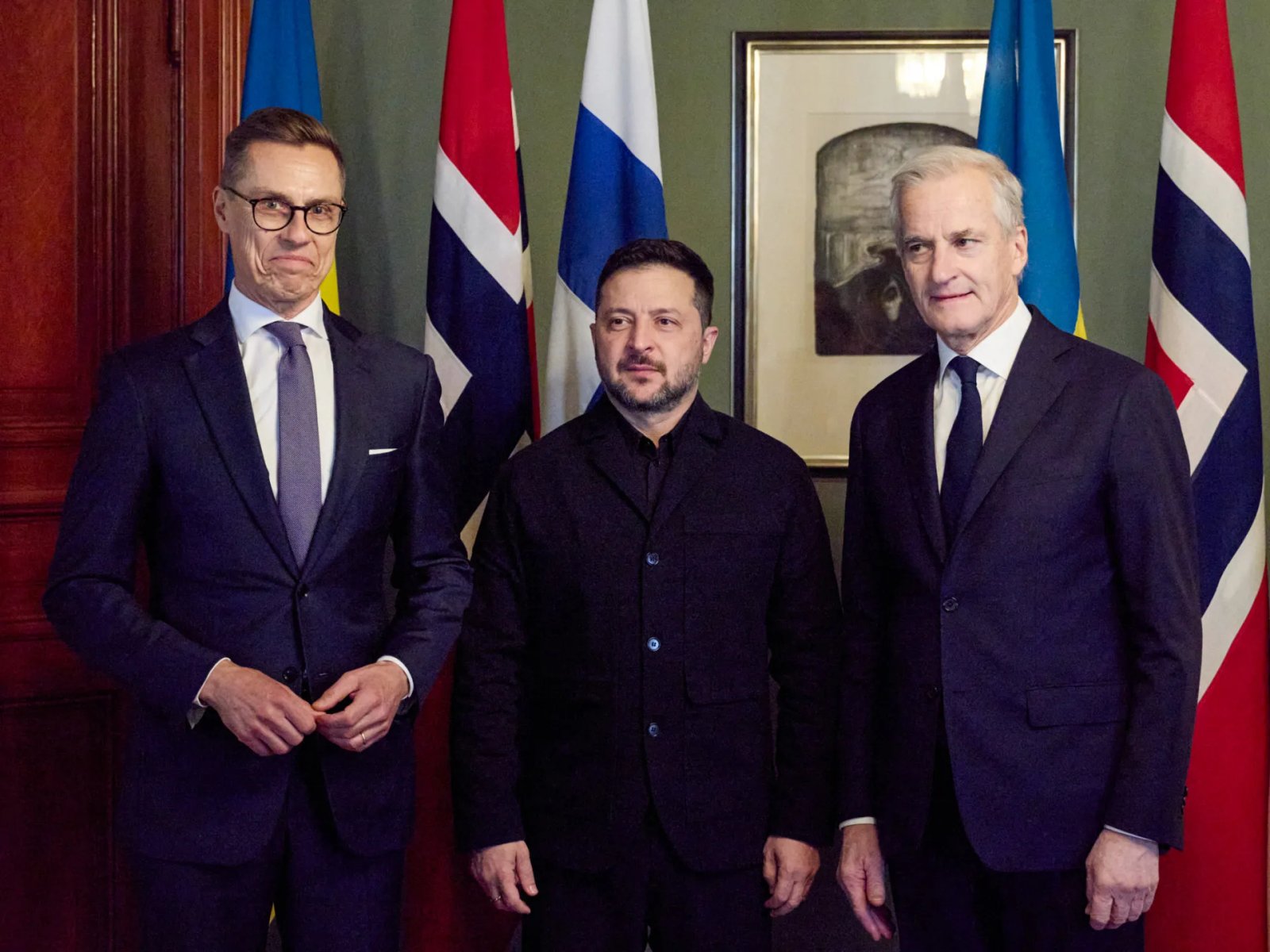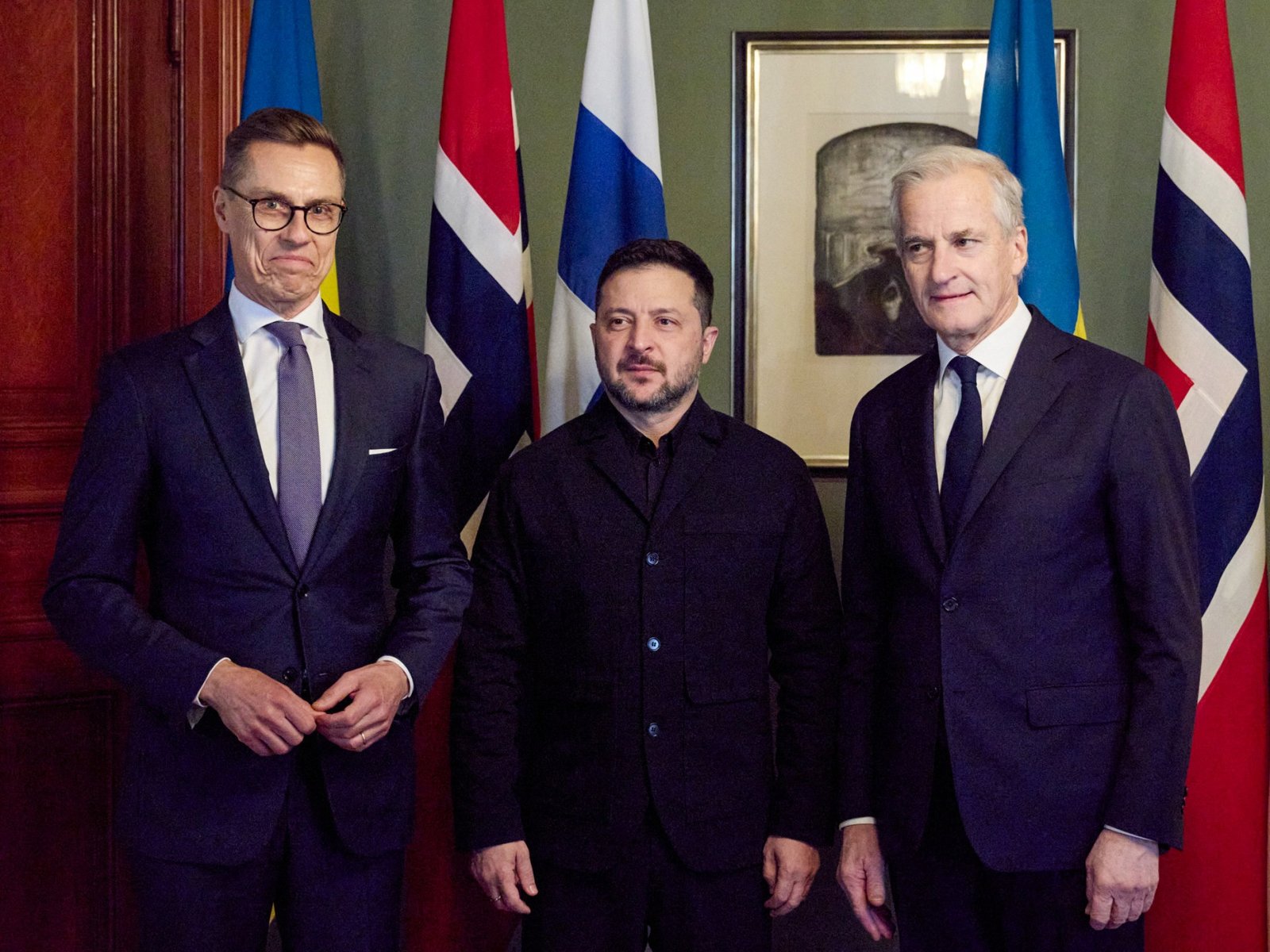
The leaders of Finland and Norway held a rare direct phone call with Russian President Vladimir Putin on Tuesday, describing the conversation as “frank and substantive”.


The call was initiated by President Alexander Stubb and Prime Minister Jonas Gahr Store from Helsinki “to discuss Russia’s war of aggression against Ukraine and the diplomatic efforts to end the war and promote peace and stability in Europe”, Stubb’s office said in a statement.
Recommended Stories
list of 3 itemsend of list
“We are neighbouring countries to Russia. The outcome of this war will have a direct impact on our and the broader European security. Ending the war requires direct discussions,” said Stubb.
“The war comes with enormous human and material costs. The suffering and destruction will impact generations. In the call we stressed the importance of de-escalation”, said Store.
The pair spoke with Ukraine’s President Volodymyr Zelenskyy afterwards, and the country’s Foreign Minister Andrii Sybiha said the call had been coordinated with Kyiv, calling it “the right approach”.
“We welcome such active support for our diplomatic efforts and peace process,” he said.
Russia sought to dampen the importance of the call, with the Kremlin’s readout of the exchange stating that long-term peace was possible “only if the legitimate interests of the Russian Federation are fully and unconditionally taken into account”.
The readout also said that “attention was drawn to the confrontational policies of EU [European Union] and NATO countries, which are contributing to the prolongation of the hostilities”.
Foreign Minister Sergey Lavrov also downplayed the Finnish and Norwegian initiative, saying that European countries were merely seeking a role in future negotiations.

Nordic criticism of Putin call
Most Western European leaders have avoided direct contact with Putin since Russia’s full-scale invasion of Ukraine began in February 2022, and there was a rare Nordic rebuke to Finland and Norway from Danish Prime Minister Mette Frederiksen, who said she was “very sceptical” of reaching out to Putin.
“I think Europe should stick together rather than going solo,” said Frederiksen.
Sweden’s Prime Minister Ulf Kristersson was also cautious about the outcome of the 90-minute conversation. Swedish public broadcaster SVT quoted him as saying, “If talks lead to peace, talks are good. My experience is that the results so far after the German and French talks have been very modest. And if you look at what Russia is doing on the ground every day, I don’t think there is anything to suggest that it is peace they are after – it is submission.”
A member of the European Parliament from Stubb’s own National Coalition Party cautioned against Finland playing such a visible role in ending the war. Mika Aaltola said there could be “propaganda value” for Moscow in such a move.
“Putin and the Russian media have already used Stubb’s earlier comments [about the conflict] as proof of the West’s wavering,” Aaltola said, while citing a “lack of coordination” and warning that “a single call weakens the common line”.
The Kremlin gave no hint that Moscow is ready to back down from its key demands, insisting that any lasting peace settlement must fully accommodate Russia’s interests.
Zelenskyy said Russian attacks, including relentless strikes on Ukraine’s power grid, must stop in order to open a path to peace.
“There must be peace, de-escalation is needed, and Russia must stop dragging out the war,” Zelenskyy said on X.

Russian attacks continue
Meanwhile, Russian attacks on Ukraine continued Tuesday, with a strike on transport infrastructure in Kyiv targeting a major bridge.
Officials in Kyiv said the South Bridge was hit in overnight attacks on the city that included 16 ballistic missiles and more than 280 drones. Zelenskyy said Russian forces struck again while emergency crews were still dealing with the aftermath of the initial strikes.
“This is a serious escalation in Russia’s campaign targeting our logistics,” he said.
Russian attacks also caused deaths and injuries in the cities of Kharkiv and Pavlohrad.
Russia’s Ministry of Defence said on Telegram that its forces had targeted transport infrastructure in Kyiv and a logistics hub in the Kharkiv region, along with industrial sites and cargo vessels it said were serving military purposes.
Officials in the Russian-controlled part of Ukraine’s southeastern Zaporizhia region said a drone strike on a bus killed one person and injured 30 others.
One person was also killed and six others were wounded in a drone attack on the Russian city of Bryansk, near the Ukrainian border.
The attacks come as the warring sides prepare for talks. On Friday, Kyiv and Moscow said they had agreed to hold United States-mediated technical meetings in Abu Dhabi in early November.
In a separate development, US President Donald Trump has credited his wife, First Lady Melania Trump, with securing a localised ceasefire in the southern Kherson region, which took effect on Tuesday to allow aid into the Russian-controlled town of Oleshky.