The US decision to suspend eight IT firms, including Microsoft, Tata Consultancy Services, Infosys and Wipro, from a programme to apply for green cards for foreign workers drew a sharp response from India Friday which said the steps announced “do not advance the shared ambitions” of both countries.



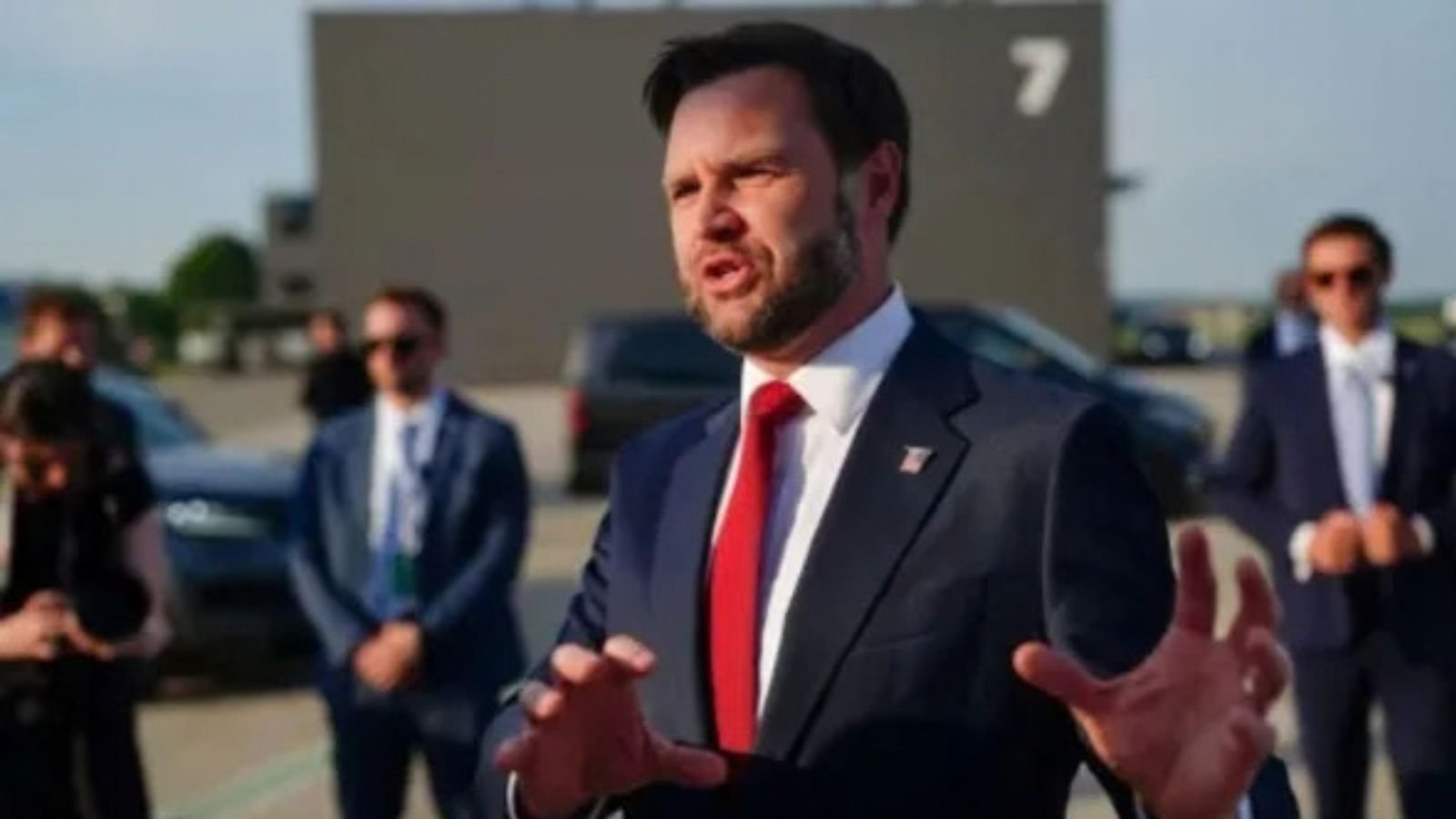
On US Vice President J D Vance referring to foreign workers hired on H1-B visas as “foreign indentured servants”, the Ministry of External Affairs said “resorting to terminology that carries painful historical and colonial legacy connotations is deeply offensive”.
Delhi’s response came hours after the US administration suspended some of the largest IT outsourcing firms in the world from the Permanent Labour Certification Programme. The PERM is a key provision used by American employers to sponsor foreign workers for permanent residency, with several Indian IT companies also relying on the system.
In a statement, the MEA said, “We are aware of the US Department of Labor’s decision concerning the Permanent Labor Certification (PERM) programme for certain companies.”
“It should be noted that PERM is distinct from the H-1B visa programme. The suspension of PERM applications does not, by itself, affect the validity of existing H-1B visas or the status of H-1B visa holders and their dependents, though there could be some impact on the permanent-residency/Green Card process of eligible employees of the affected companies,” it said.
Widening of crackdown
The latest US action is a clear broadening of crackdown on foreign workers that has become a central policy under Trump. Technology and IT services companies are facing greater scrutiny over their reliance on foreign workers. US authorities have stepped up their probe into alleged misuse of H-1B and PERM programmes.
The MEA said movement of talent adds value to both India and the US economically – this has been Delhi’s position for several years now, highlighting the contribution of Indian skilled professionals in the US.
“It should also be clear that talent mobility adds value to both economies. While it creates opportunities for Indians, it equally helps US companies with cutting-edge talent, innovation, research, productivity, competitiveness and job creation, besides creating shareholder wealth in the US. This is therefore an area of tremendous mutual benefit for the two countries and our expectation is that all stakeholders in this process can appreciate this fact. The steps announced by the US do not advance the shared ambitions of both countries,” it said.
Story continues below this ad
On Vance’s remark labelling them as “foreign indentured servants”, the MEA said, “We have also seen some comments in this context by the US Vice President. We believe that such descriptions are unwarranted and ignore the fact that Indian professionals in the United States are highly educated and skilled contributors to its economy and innovation ecosystem. Indeed, the history of the United States itself has been shaped by generations of immigrants whose labour, enterprise and innovation have contributed to its growth and prosperity. Resorting to terminology that carries painful historical and colonial legacy connotations is deeply offensive.”
The latest US action is a clear broadening of the crackdown on foreign workers that has become a central policy under President Donald Trump. Technology and IT services companies are facing greater scrutiny over their reliance on foreign workers.
US authorities have stepped up investigations into alleged misuse of the H-1B and PERM programmes, including claims of wage undercutting, fraudulent filings and displacement of American workers. Indian professionals account for a large share of H-1B beneficiaries and employment-based Green Card applicants.
In a statement on the US announcement, TCS said it prioritises local hiring in its US workforce strategy and does not expect any major disruption or impact on its business operations or client engagements.
Story continues below this ad
TCS said its PERM applications were in single digits in the last two years and does not expect suspension of the programme to impact its workforce strategy and customer engagements. The company said it intends to hire 15,000 people in the US over the next five years. It said it has built a significant local workforce across 31 offices and delivery centres throughout the country.
Microsoft said the vast majority of its employees were Americans. “We believe in the strength and talent of the American workforce. That is why the vast majority of Microsoft employees in the United States are Americans,” it said.
Microsoft only files H-1B petitions for those who meet the rigorous standards of this visa category, it said, adding, “We pay our H-1B employees the same as any other employees doing comparable work.”
Technology industry body Nasscom said, “While the decision affects a specific immigration pathway, Nasscom has consistently maintained that immigration and skilled talent mobility are two distinct issues and should not be viewed through the same lens.”
Story continues below this ad
“The H-1B visa programme has historically played an important role in addressing short-term skill gaps in the US and it will continue to be used to address short term talent gaps. However, over a number of years, Indian technology companies have significantly reduced their dependence on H-1B visas, while steadily expanding local hiring and building a strong domestic workforce in the US. They work with the majority of the US fortune 500 companies, enable them to innovate and grow, and generate more local jobs. Consequently, the number of employees transitioning from H-1B visas to permanent residency through the PERM process is also relatively limited,” it said.
“Indian technology companies operate across more than 80 countries and have consistently demonstrated their commitment to complying with local laws and regulatory requirements. We are confident that they will continue to adhere to applicable regulations in the US as well,” Nasscom said.