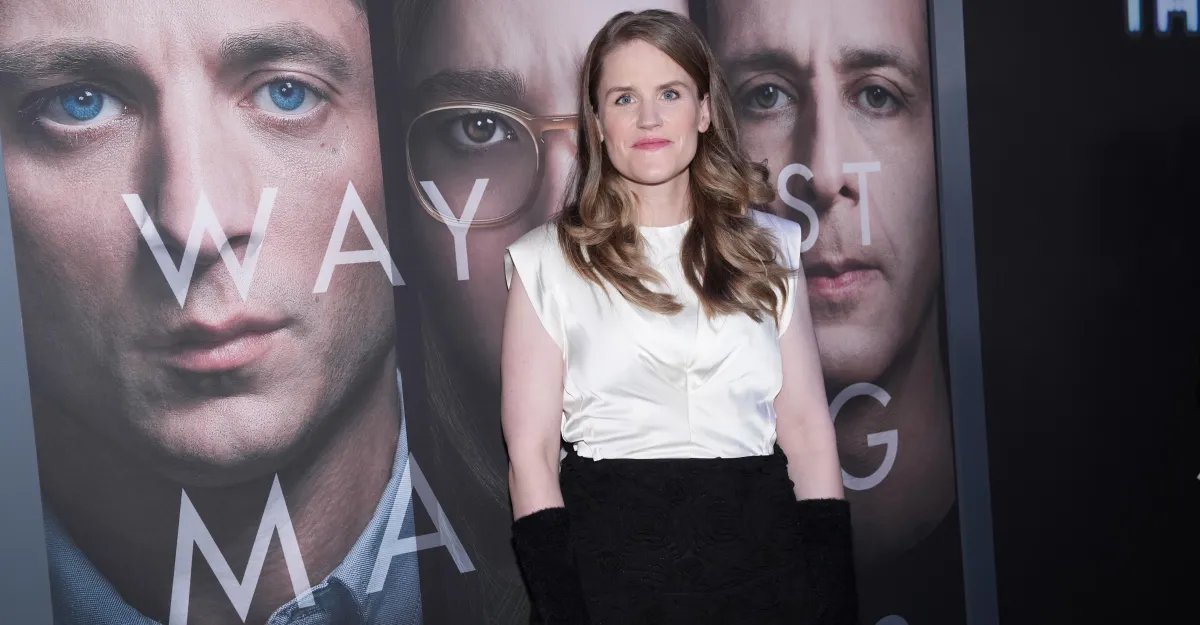
Facebook whistleblower Frances Haugen was mostly unfazed watching Oscar-winning actress Mikey Madison play a character named after her in The Social Reckoningexcept for one thing: the wrist warmers.



In Aaron Sorkin’s new thriller, the fictional Haugen — who, like her nonfictional counterpart, leaks thousands of documents to Wall Street Journal reporter Jeff Horwitz — habitually dons the accessories. It’s a character quirk that reflects real life, where they’re a way to deal with the effects of a vasoconstrictive disorder. “I’ve figured out lots of ways to minimize how much of an obstruction this is,” she tells. The Verge in an interview. “But having to watch myself wear wrist warmers for two hours, I came out of it being like, ‘Oh my god, this is really disruptive. Like, how have I successfully not thought about this for like seven years?’” With The Social Reckoning appearing in theaters Friday, Haugen hopes Meta’s CEO might watch it and have a similar moment of recognition with his own counterpart: a callous, robotic character played by Jeremy Strong. “I hope Mark Zuckerberg watches the movie and has as much of a knee-jerk emotional response as I had on that regarding, ‘Do I really want to live this life anymore?’”
Strong’s version of Zuckerberg has become sick of taking criticism for content moderation and fact-checking decisions as he prepares for congressional testimony, and waves off concern for design choices that his staff believe will stoke anger on the platform. “It’s very possible that Mark has learned not to see how distorted his world has become,” Haugen says. “My hope is that holding that mirror up, if he does ever watch the movie, that it gives him the gift of perspective, so he at least has a chance to choose.”
“I hope Mark Zuckerberg watches the movie and has as much of a knee-jerk emotional response as I had”
Five years since she went public as the figure behind the Journal‘s Facebook FilesHaugen hopes that the film can remind viewers about the breadth of information they uncovered and “humanize the whistleblowing experience.” While she says her mother may take issue with Madison’s young, brunette character being shorter and less blonde, she’s happy the fictional Haugen stands apart from her. “We want as many people as possible to see themselves in Mikey’s character,” she says. If someone at a frontier AI lab becomes “so unlucky that they find themselves in a place where they need to blow the whistle,” she hopes they’ll connect with the fictional Haugen and “be like, ‘Oh, I actually have a duty to my common human beings and fellow citizens to do that.’”
One of Haugen’s most tangible impacts was providing evidence in lawsuits that claim Meta harmed young users, culminating in a $17 billion settlement earlier this year. But as the movie reminds viewers, child safety wasn’t what initially motivated her. In fact, documents about Instagram’s impact on teens were among the last she collected before resigning, because she worried clicking around too far outside her own subject area of civic integrity would raise alarms. “The collective memory of ‘What exactly was I complaining about?’ has shifted,” Haugen says. “Only about 10 percent of what I brought out was about kids.”
Revelations about how the algorithm pushed users toward extremist groups, special content moderation privileges for elite users, and other issues “kind of disappeared into time,” she says. Meta declined to comment on the movie but has previously said the documents Haugen disclosed were cherry-picked and flatten decisions the company has had to make amid difficult tradeoffs.
“We want as many people as possible to see themselves in Mikey’s character”
Still, Haugen has since engaged frequently on policy around social media and kids, much of that in Europe and Australia, where movement seemed more likely than in the US. While she says she’s “not a prohibitionist” when it comes to social media, she believes Australia’s youth social media ban pushed Meta to implement what she calls “’yeah, duh’ features” to combat the threat. “I don’t think the first line of defense is you ban kids off social media,” she says. “But the problem is that platforms have shown repeatedly that they’re not particularly interested in making these spaces safe for kids, and Facebook particularly has shown they only improve safety for kids when they’re scared.”
Meta has aggressively moved to silence another recent whistleblower, former public policy director Sarah Wynn-Williams, taking legal action. to stop her from promoting her memoir about her time at the company, Careless People. But Haugen says she sees Meta’s action against Wynn-Williams as an “outlier,” in part because her retelling relied much more on personal narrative than Haugen’s reams of documents. Before Haugen’s character obtains the documents, “there’s a scene in the movie where the Jeff character tells the Frances character, ‘You didn’t give me evidence, you gave me a story,’” she says. “And because a lot of what [Wynn-Williams] is saying is dependent on her personal credibility, Meta very, very desperately needs no one else who had access to that same information to ever come forward.”
As hype over artificial intelligence overtakes Meta and the rest of Silicon Valley, Haugen says conversations around industry regulation and public dissent are already much further along in AI than they were at a similar point with social media. Though she says some proposals seem “simplistic or misdirected,” like a pause on development, she’s encouraged that “we see people engaging, and we did not see people engaging even four years into social media.”
Reflecting on her own decision to go public as a whistleblower, Haugen tells The Verge that she took a pretty dispassionate approach. She knew Meta could cause financial hurt, but says she didn’t worry too much about that. “I’m a Quaker and I don’t take a lot to be very content and happy,” Haugen says. “They can only take as much from you as you let.” them.”