
Donald, it’s done bro.The phrase (coined by Salman Khan) has basically become a major part of Indian politics with parties across lines using it to one up each other in the ever lasting loop of the electoral cycle.But for the 45th & 47th POTUS, the phrase may signal things to come.Trump who won 312 votes from the electoral college and secured 49.8% of the popular vote, may now be described as a “lame duck” president.Wednesday’s results confirm what the pollsters have been predicting in the midterms. A majority for the Dems in both the House and the Senate.With both chambers now painted blue, Trump’s agenda which was already facing scruitny is now all but stuck in the political quagmire.And, by the time the next cycle comes around Trump will no longer be the POTUS nor can he (legally) contest again.The real estate baron-turned-politician may have suffered a major setback, but declaring the end of his grip on American politics would be premature. The midterm results will undoubtedly limit Trump’s agenda, but counting out the MAGA founder has rarely been a safe bet.Having defied expectations in 2024, Trump has repeatedly shown a knack for pulling a card out of his sleeve when the odds appear stacked against him.So, is it too early to write the political obituary of Trump or would it be premature to draw the curtain on the MAGA founder? Let’s break it down.



History of the ‘lame duck’
Within hours of the polls closing, White House communications director Steven Cheung posted a reminder: “Still your President!” The message was mocked online, with users describing Donald Trump as a lame duck.The phrase dates to 18th-century London, where it described a stockbroker unable to meet his debts. In American politics, it describes an office-holder whose influence is fading. Trump, however, has more than two years left in office. A weakened president is not necessarily powerless.
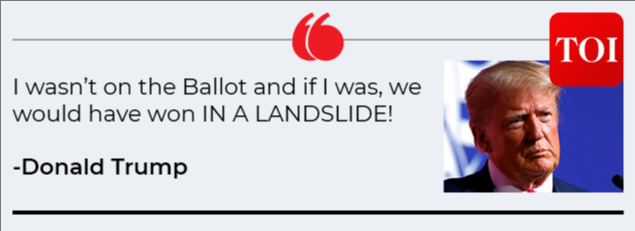
What Trump said after a dismal show by the Republicans in polls
Democrats have won control of both chambers. The Senate is projected to have 54 Democrats and independents who caucus with them, against 44 Republicans, with two races uncalled. They flipped at least seven Republican-held seats and more than two dozen House districts. The last president to lose both chambers in a midterm election was George W Bush in 2006.Republicans remain in control until the new Congress is sworn in on January 3, 2027. After that, Democrats can block legislation, reject nominees and investigate the administration, but they cannot control the executive branch.
A blue wave, state by state
In Texas, Democrat James Talarico defeated Ken Paxton with about 55% of the vote, becoming the first Democrat to win a Senate seat in the state since 1988. In Maine, Troy Jackson defeated incumbent Susan Collins. Democrats also flipped seats in Iowa, Kansas, Ohio, North Carolina and South Carolina.Democrats also flipped more than two dozen House districts and won Republican-held governorships in Georgia, Iowa, Ohio and Texas. Hakeem Jeffries is poised to become the first Black Speaker of the House, subject to a vote in January. High living costs, the Iran war and corruption concerns all featured in voters’ frustrations. Trump congratulated Democrats but blamed some Republican candidates for the losses.Russia And Ukraine: Congress can help, but cannot make peaceFor Kyiv, a Democratic Congress may offer a more sympathetic audience, but it will not automatically change the White House’s approach. Gregory Meeks, the top Democrat on the House Foreign Affairs Committee, backs legislation for security, economic and intelligence support to Ukraine. Democrats can use hearings and funding to keep assistance on the agenda.
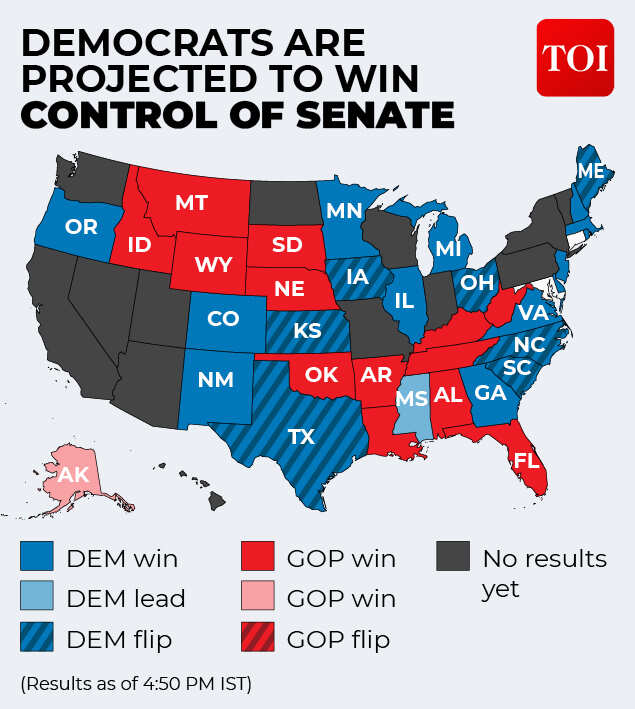
Congress turns blue: Democrats win control of both the House and Senate.
Congress approved $400 million in military assistance, but the Pentagon has told lawmakers it will not complete the spending until fiscal year 2029, frustrating Democrats and some Republicans. Lawmakers can authorise money, but cannot dictate foreign policy.The administration’s dealings with Moscow show the limits. On October 9, the US Treasury authorised transactions involving Russian-origin diesel. A week later, Trump waived sanctions provisions under the new Graham Act, arguing they could impede negotiations with Russia. Meeks criticised the move, saying it weakened pressure on Vladimir Putin.Democrats can challenge such decisions and make sanctions relief harder, but they cannot take charge of negotiations or replace presidential diplomacy.
Iran: The war voters could not ignore
The war with Iran has become one of the most politically costly parts of Trump’s second term. It began on February 28, and Iran’s response disrupted shipping through the Strait of Hormuz, pushing up energy costs. By late September, US petrol prices had reached around $4.50 a gallon.Democrats tried repeatedly to use war-powers votes to constrain the president. In June, a resolution advanced after four Republicans joined Democrats, but the Senate later blocked a further attempt, exposing divisions within the Republican ranks.Trump has not ruled out renewed military action, while indirect negotiations continue. Reuters reported on November 3 that Washington and Tehran remained far apart, with Iran demanding sanctions relief and an end to the US naval blockade before reopening the Strait. Trump said he was not seeking further conflict but would act if necessary.The president has significant authority to order military operations as commander-in-chief and does not always need prior congressional approval. But the 1973 War Powers Resolution requires him to notify Congress within 48 hours of introducing US forces into hostilities. It also requires forces to be withdrawn within 60 days unless Congress authorises the operation, with a possible 30-day extension to complete withdrawal.
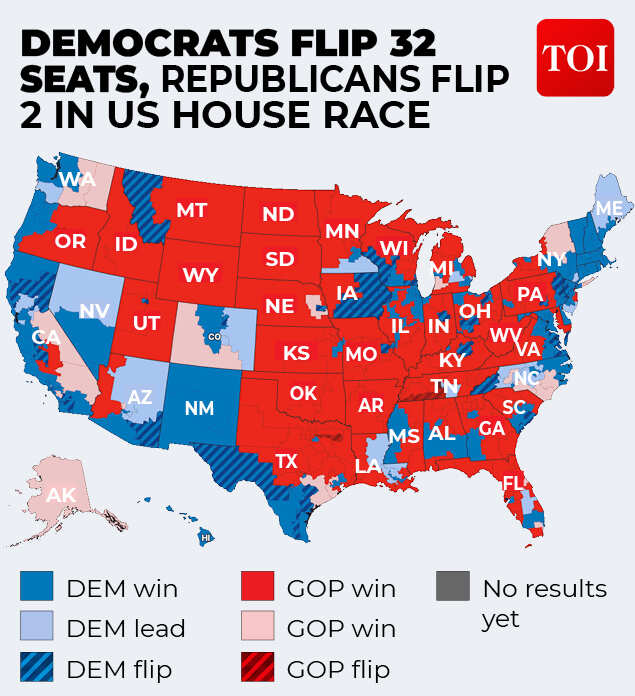
Red states flip: Democrats score major Senate victories in Texas, Ohio and Iowa
Democrats can hold hearings, demand information and use funding legislation to apply pressure. Presidents of both parties have disputed the reach of the War Powers Resolution. After Democrats won Congress in 2006, George W Bush vetoed a bill tying Iraq war funding to a withdrawal timetable. Congress failed to override him and later approved funding without the deadline. The purse gives lawmakers leverage, but using it requires unity.
Tariffs: A wall that keeps being rebuilt
Trade policy is another front. On February 20, the Supreme Court ruled 6-3 that the emergency powers law Trump had used to impose sweeping tariffs did not authorise them. He responded with a 10% global tariff under Section 122 of the Trade Act of 1974. That measure expired on July 24, after the law’s 150-day limit.The administration has since relied on other laws, including Section 301 of the Trade Act and Section 232, which allows tariffs on national security grounds. It has also used Section 338 of the Tariff Act of 1930 to impose duties on selected Canadian goods.Democrats want to restore Congress’s control over trade policy. Chuck Schumer’s End Trump’s Tariff Tax Act, introduced with 28 co-sponsors, seeks to terminate and refund certain duties. Jeffries has made reversing the tariffs a priority. But any bill will need Trump’s signature or a veto-proof majority. The Supreme Court has blocked one route, not the administration’s use of other trade laws.
Investigations: No easy removal, but plenty of problems
Impeachment may return to the conversation, but removing Trump is a much higher bar. The House can impeach by a simple majority. Conviction in the Senate requires a two-thirds vote of senators present, or 67 if all 100 attend. Democrats are well short of that threshold.Trump has already been impeached twice and acquitted twice by the Senate. Andrew Johnson and Bill Clinton were also acquitted after impeachment trials. Richard Nixon resigned in 1974 before the full House could vote. These precedents help explain why Democrats may focus first on investigations rather than make impeachment the centrepiece of their agenda.From January, Democratic-led House committees will gain the subpoena powers and resources that come with chairing the chamber. They are expected to examine the Jeffrey Epstein files, immigration enforcement, the Justice Department, presidential pardons and alleged conflicts of interest involving Trump’s family and allies. Robert Garcia, expected to lead the Oversight Committee, wants to subpoena Attorney General Todd Blanche over the handling of the Epstein files. He has also signalled scrutiny of Trump family business dealings and donors to the proposed White House ballroom.The inquiries could force officials to answer questions in public, but subpoenas can be challenged in court. House Democrats’ effort to secure testimony from former White House counsel Don McGahn, launched in 2019, took until 2021 to resolve. Investigations do not automatically bring down a president. Their impact depends on what they uncover.
Healthcare, spending and judges: The other pressure points
Jeffries has promised to focus on affordability, including restoring expired Affordable Care Act subsidies and reversing nearly $1 trillion in Medicaid cuts. Democrats can pass bills in the House, but major changes will need Senate support and Trump’s signature. A Democratic House can, however, block spending bills and other Republican priorities.The 35-day shutdown of 2018-19 ended without Trump securing border-wall funding, but shutdowns disrupt public services and hurt federal workers. Democrats can also slow or block Cabinet and judicial appointments. Any Supreme Court vacancy would become a major political battle.
Not over yet: The veto and the pen
As results came in, he posted a picture of a red cap bearing one word: “Veto”. In a late-night Fox News interview, he said Democrats would eventually have to negotiate after he blocked their legislation.Overriding a presidential veto requires two-thirds of both chambers, usually 290 votes in the House and 67 in the Senate if all members vote. Democrats are nowhere near those numbers and would need substantial Republican support.Trump can also continue issuing executive orders and directing federal agencies, although courts can challenge them and a future president can reverse them. On returning to office in January 2025, Trump cancelled dozens of Joe Biden’s orders. A Democrat could do the same in 2028.He can shape US diplomacy on Iran and Ukraine, decide how to approach Russia and China, and exercise the presidential pardon power. Congress can scrutinise those decisions, restrict funding and impose political costs, but it cannot take over diplomacy.
So, can he be stopped?
Partly. Democrats can investigate, delay and block legislation, making it harder for Trump to translate his agenda into law. But they cannot govern from Congress alone, and the veto remains a formidable shield.The next two years will depend on the courts, Republicans willing to break ranks and voters in 2028. Trump has lost Congress, not the presidency. The Trump era has entered a new phase, but the next two years are unlikely to be a quiet exit. Washington is about to learn how far a wounded duck can swim.