There was a time when the first question about an Indian cricketer was what he had done on the field. Lately, there’s another one that matters just as much: when will he be fit enough to come back?



The list of players on the sidelines has grown long. I’ve watched Indian cricket long enough to understand all that. I’ve also watched it long enough to think we should ask hard questions when so many players are unavailable.
When I asked Kapil Dev recently how he had stayed fit through such a long career, his answer was typically plain.
“I ran, ran, and ran.”
He had no elaborate programme to describe, no list of exercises to recite, and no interest in dressing the answer up in the language of sports science. Kapil just ran. He understood his body, knew what he wanted from it and worked towards that. For a fast bowler who carried such a heavy workload, the simplicity told me a lot.
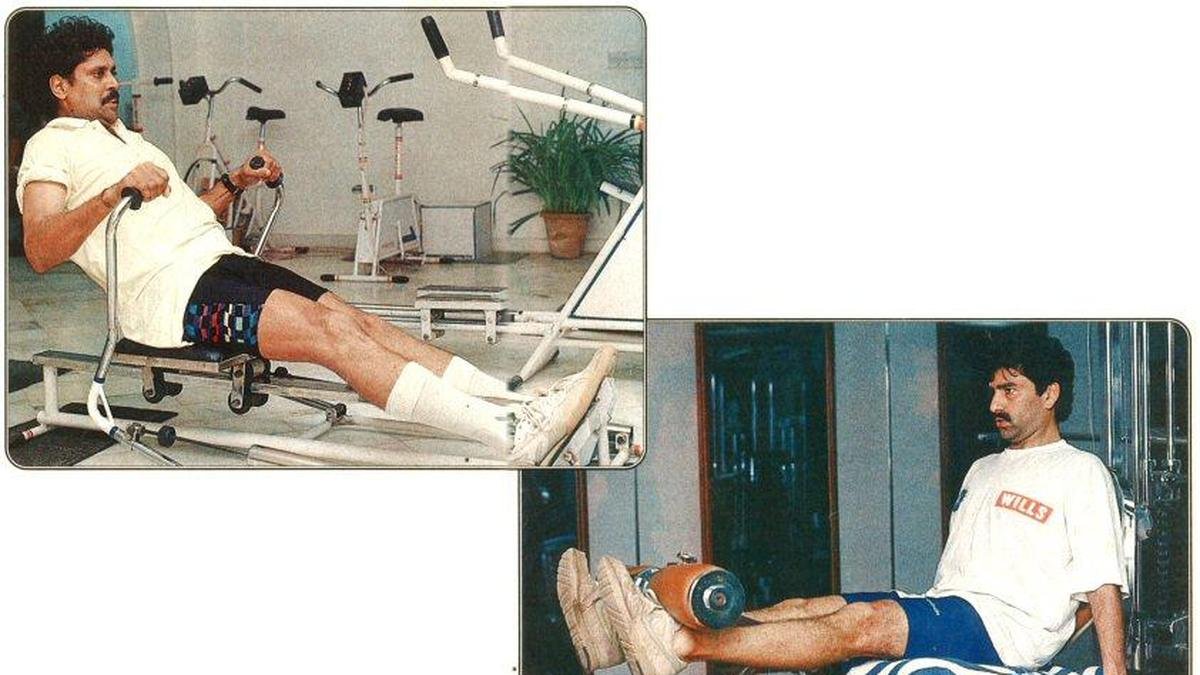
I had seen some of that approach more than three decades ago, when I was working on a story about how Indian cricketers kept fit in the off-season.
This was 1994, and Sportstar was a weekly magazine with a loyal following among players and readers alike. We ran a popular column called Life Lines, in which cricketers answered a series of personal questions. Players would call me to ask when their turn was coming. People were curious about cricketers beyond what they did on the field.
During the off-season, Mr S Krishnan, then The Hindu and Sportstar Sports Editor, suggested I look for some offbeat subjects. I proposed a story on fitness, and Kapil was the obvious person to start with. I knew he went to the National Sports Club of India, where he ran on the treadmill and swam, so I asked him about it.
Kapil invited us over. My colleague V.V. Krishnan and I spent three hours with him at the NSCI, watching his routine in the gym and putting the story together. Manoj Prabhakar, who was also in Delhi, became part of the piece. The two followed different schedules, but both saw the off-season as the time to get ready for the season ahead.
It taught me something I would see again over the years: fitness didn’t look the same from one player to the next, and it didn’t always announce itself.

When I wrote about off-season fitness in 1994, Mohammad Azharuddin reminded me that athleticism mattered well beyond fast bowling. His preparation and relentless practice catching showed how much work went into staying sharp.
| Photo Credit:
THE HINDU ARCHIVES

When I wrote about off-season fitness in 1994, Mohammad Azharuddin reminded me that athleticism mattered well beyond fast bowling. His preparation and relentless practice catching showed how much work went into staying sharp.
| Photo Credit:
THE HINDU ARCHIVES
The story brought a call from India captain Mohammad Azharuddin, who wanted me to know that players outside Delhi were working hard on their fitness too. Azhar was trying to convince me that fitness was not just the domain of fast bowlers. Batsmen too believed in staying in good shape. He later showed me his gym in Hyderabad. “As modern as you can get,” he boasted. Azhar was an outstanding fielder essentially because he did not falter in his preparation. He would take 100 practice catches in a day, some of them quite difficult, and his work in the field, along with the development of a strong arm like Kapil’s, showed the natural athleticism that marked much of his career.
Kapil, though, stood apart for me. Of all the Indian cricketers I’ve watched, he remains the finest athlete. I loved watching him run and go through his pre-match exercises. He wasn’t a fast bowler going through the motions before a game. He looked like an athlete getting ready to compete.
The numbers back that up. Kapil played 275 First-Class matches and bowled 48,853 balls in them, not counting his one-day internationals. He could bowl long spells, particularly in India, often on hard outfields and placid pitches that made the work tougher. Sunil Gavaskar leaned on him as a go-to bowler, and Kapil rarely looked as if the load was wearing him down. He would happily bowl to frontline batsmen in the nets and still have energy to test the tailenders. I wouldn’t say every cricketer could have followed Kapil’s methods and got the same results. If covering the game taught me one thing, it’s that fitness is deeply individual.
I remember an evening at the Kotla that made the point well. Raman Lamba, a dear friend and a fitness enthusiast, was also a fine footballer. He liked challenging people to show off his athleticism. After the nets, he challenged Mohinder Amarnath to a running duel around the boundary. Lamba was confident, as he usually was when the talk turned to fitness. About 10 laps in, he dropped out. Mohinder kept going, and Lamba couldn’t stay with him.
What struck me was the difference between the two. Lamba was happy to boast about his fitness and dare others to prove theirs. Mohinder never advertised how fit or agile he was. He just got on with it. It stayed with me because it showed that the most conspicuous athlete isn’t necessarily the fittest, and the man who talks least about fitness may have the most to show for it.

Me in the august company of the great Kapil Dev.
| Photo Credit:
Special arrangement
Me in the august company of the great Kapil Dev.
| Photo Credit:
Special arrangement
It was his supreme fitness that allowed Kapil to pull off a sensational victory in Melbourne in 1981 with Australia chasing a target of 143. At the end of the fourth day, he was in acute pain from a thigh injury and was helped by Dr Narottam Puri, who treated him but also advised him not to take the field the next morning. “I feared he may aggravate the injury,” Dr Puri, who was on the tour as a broadcaster, recalled. But Kapil took the field and produced a sensational spell of five for 28 as India won by 59 runs.
I’ve heard other stories from that era about the different attitudes players brought to physical preparation. On a tour of New Zealand, when Bishan Singh Bedi was the coach, he had asked the players to run from the airport to the nearby team hotel. Some of the players were reportedly uncomfortable and managed to convince Bedi to change his decision. But then many players, at different times, have confessed to me that they became better cricketers because of Bedi’s demanding fitness regimen. It’s an amusing story, but it also points to something worth saying. Fitness has to serve the demands of the sport. Let it be stressed here that Dilip Vengsarkar, not a big fan of punishing his body to stay fit, was an excellent fielder and ran judiciously between the wickets.
On the same subject of Bedi’s love for fitness, I can share an anecdote from the 1983 West Indies visit, when he was a National selector. It was narrated by former Test batsman Gursharan Singh. “When Bedi paaji was around, there was no compromise with fitness. Those days, we would have a Rest Day during a Test, and he took Sherry (NS Sidhu) and me (we were part of the squad) to the Wankhede Stadium. He ordered us to run around the boundary and not stop until he instructed us. We took off and had completed 11 rounds when he remembered us. He had been busy talking with one of his cricket friends. We were drained, but it was this fitness which helped us perform better,” said Gursharan.
India great Sunil Gavaskar was a champion at reading his body and was known to preserve his energy for the big event. “Never saw a better runner between the wickets. Never saw him exhausted,” Bedi told me once about Gavaskar. At the 1987 Reliance World Cup preparatory camp at the National Stadium in Delhi, he chose not to bat at all because of the quality of the pitches. He found the bounce awkward since he was struck on the glove on the first day. Gavaskar was happy just doing his ‘knocking’ but was in his zone for the inaugural match against Australia at Chennai. The first ball he faced, from Craig McDermott, was a classic straight drive.

Sunil Gavaskar was not just a master of batting technique. He understood how to preserve his energy and prepare for the moments that mattered.
| Photo Credit:
THE HINDU ARCHIVES
Sunil Gavaskar was not just a master of batting technique. He understood how to preserve his energy and prepare for the moments that mattered.
| Photo Credit:
THE HINDU ARCHIVES
I saw the same principle in players like Virender Sehwag, whose strengths didn’t show up in a fitness test. But he never failed a fitness test. Sehwag was never the most conspicuous runner on the field. Sehwag’s answer to a difficult situation was often to find the boundary. He judged a single superbly and knew which bowlers he could attack without being forced to run too many singles. That cricketing sense let him save his energy for what he valued most: batting for long periods and scoring runs. “Fielders have to run, not me,” Sehwag was blunt. I never saw him leave the field because he was tired, and I don’t remember him missing too many matches on fitness grounds. That doesn’t mean running and endurance didn’t matter to him. It means fitness can’t be judged apart from the job a player has to do.
Former India fast bowler Venkatesh Prasad once told me a story that made the same point from a different angle. At the KSCA Stadium in Bengaluru, he saw the National hockey team training and asked if he could join them for a run. They welcomed him. After two laps, he had to drop out because he couldn’t keep pace. Prasad was a fine fast bowler, but the demands of a hockey player are different. So are those of a footballer and a swimmer. Each sport builds its own kind of endurance and movement, and comparing athletes without allowing for that misses the point.
When I spoke to Kapil about fitness, he kept coming back to the importance of knowing your own body. A captain might ask a bowler for one more over, but the bowler has to know whether he can deliver it without risking a breakdown. Saying yes just to please the captain could leave the team a bowler short later. He also spoke about the nets. “I used to practice test deliveries and rehearse imaginary match situations, trying things I might not attempt in a game. For me, the nets were an important place to bowl. They were where I got ready for the pressure of competition,” said Kapil.
He was just as clear about endurance. “A fast bowler has to prepare for the season in the off-season, not wait until the first match is close. The work can’t stop because the last season has ended. Strong thighs and shins, in particular, matter when the body has to take the repeated impact of a fast bowler’s delivery stride. Also, bowling action is vital,” Kapil shared his philosophy.
One more part of Kapil’s thinking struck me. He didn’t believe a player should keep pushing when the body was tired or the rhythm was missing. “Take a break, and come back to the nets when you’re ready. Understanding the body mattered as much as working it hard,” he emphasised. That may sound obvious now, when players have fitness coaches, physiotherapists, dietitians and detailed workload assessments. But the older generation often had to work things out for themselves. They talked to senior players, took in advice and built routines that suited them. Many played long domestic seasons and demanding overseas tours without the support systems modern cricketers have.

Ishant Sharma, the only Indian fast bowler besides Kapil Dev to play more than 100 Tests, stressed the importance of bowling in the nets during the off-season.
| Photo Credit:
Getty Images
Ishant Sharma, the only Indian fast bowler besides Kapil Dev to play more than 100 Tests, stressed the importance of bowling in the nets during the off-season.
| Photo Credit:
Getty Images
Ishant Sharma, the only Indian fast bowler other than Kapil to play more than 100 Tests, insisted, “It is crucial that you don’t ignore your bowling process during the off-season. Bowling in the ‘nets’ keeps you in shape for the matches, and red-ball cricket is demanding. I am used to bowling 40 overs a week during the off-season. I learnt early (from coach Sharvan Kumar) that body strength is a key factor, as is concentrating in the nets. If you are a fast bowler, there is no escaping hard training, in season and off-season.”
The most trusted soldier a captain could ask for has to be Ashish Nehra, the wily left-arm fast bowler. He battled injuries and toiled to get back into shape. He never shirked his responsibilities or complained.
“Injuries happened to me. There is a difference between being injured and being unfit,” he told me matter-of-factly. “Who wants to miss out on key matches, such as the 2011 World Cup final, which I missed due to a fractured finger on my right hand sustained in the semifinal against Pakistan? It is hard to be a fast bowler, especially in these times. You have to pick the format, red-ball or white-ball cricket, that suits you, rather than just try to play them all. You have to preserve your body and prepare it for the situation after constant conversations with the support staff. I used to bowl in practice sessions and get my body used to the forthcoming challenge. All bowlers have different levels of endurance. What Mohammed Shami can do, Mohammed Siraj can’t, and vice versa. Every bowler’s fitness level will be different. The key lies in knowing what is best for you. True, there will be help from the experts on the support staff, but you know best. You have to understand the game’s situation and your rhythm. I liked Ishant Sharma for this very reason. He would visualise what the captain expected of him and more often than not deliver. How else would he have played 100-plus Tests?” Nehra analysed it well.

Having battled injuries throughout his career, Ashish Nehra believes fast bowlers must understand their bodies, manage their workloads and recognise their individual limits.
| Photo Credit:
REUTERS
Having battled injuries throughout his career, Ashish Nehra believes fast bowlers must understand their bodies, manage their workloads and recognise their individual limits.
| Photo Credit:
REUTERS
I’m not saying the past was better in every way, or that modern sports science has made players less fit. Today’s game is faster, the schedules are crowded, and the demands on players have changed. Preparation has become more specialised, and for good reason. But I do wonder whether we’ve become too quick to treat fitness as a standard prescription. Players have different physiques, bowling actions, workloads and recovery needs. What works for one athlete may not work for another.
Reputed strength and conditioning coach Ramji Srinivasan observed, “Workload should be in tandem with the skills coaches. Skill is the most important aspect. It is the dog that has to wag the tail, not the other way round.” As he rightly pointed out, in the 2011 World Cup and the 2013 Champions Trophy squads, India had 11 players who played all the formats of the game. The team had balance and rich choices.
Kapil’s career is a useful way to think about this. His method wasn’t complicated, but it wasn’t casual either. He ran, trained, bowled in the nets, ate well and understood what his body needed. He worked through the off-season and prepared for the long haul. Above all, he knew the difference between pushing himself and pushing himself too far.
More than three decades after I watched him at the NSCI, I keep returning to that conversation. Asked how he stayed fit, Kapil didn’t offer a secret. He offered a habit, repeated until it became part of him.
“I ran, ran, and ran.”
Sometimes the simplest answer says the most. The point isn’t to turn it into a formula for everyone else. It’s about understanding the discipline, self-awareness, and years of work that go into it.
Published on Oct 23, 2026