Scientists developing nuclear fusion have launched a new initiative to solve one of the most stubborn engineering puzzles standing between experimental reactors and commercial electricity.



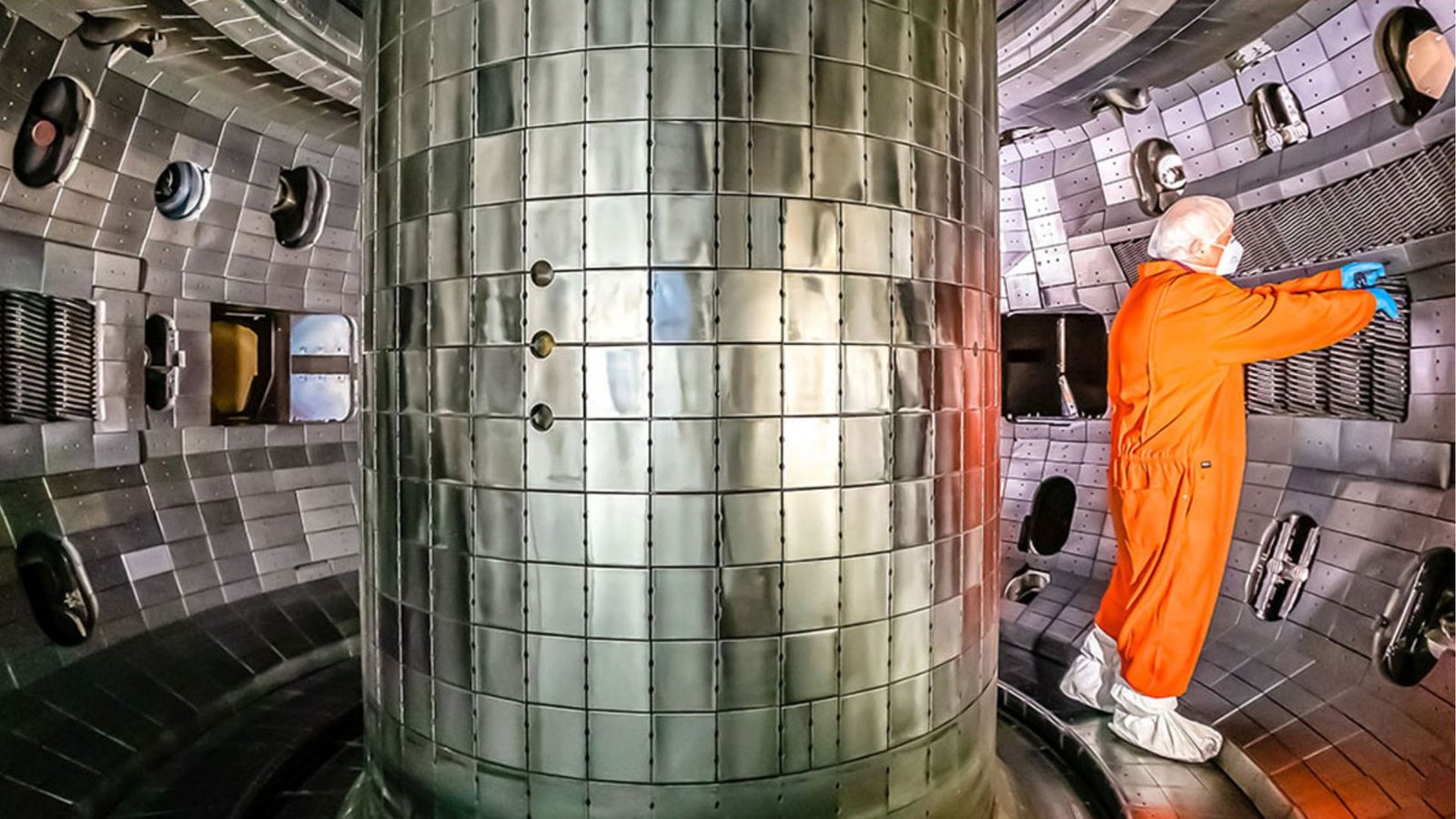
The DIII-D National Fusion Facility in California is teaming up with Japanese engineering firm Kyoto Fusioneering. Together, they will build and test a specialised exhaust system designed to handle the ferocious heat produced inside a fusion reactor. The system will be installed directly into DIII-D’s tokamak, a testbed device funded by the US Department of Energy.
Nuclear fusion generates clean power by fusing light atoms together, the same process that fuels the sun. Most research takes place inside donut-shaped magnetic chambers known as tokamaks. However, containing matter heated to over 100 million degrees Celsius poses a serious risk to machine walls.
A new operational approach for tokamaks
Standard reactors suffer from intense, sudden heat pulses that can erode interior surfaces over time. To overcome this, researchers are turning to a design known as “negative triangularity.”
“Negative triangularity, or plasma in a reverse ‘D’ shape, is a potentially transformative operational approach for tokamaks, donut-shaped fusion devices that contain plasma with magnetic fields,” explained Kyoto Fusioneering.
This alternative geometry offers an elegant physical advantage. It dampens unstable heat bursts and radiates excess thermal energy away smoothly before it can strike reactor walls. Yet despite its promise, nobody has tested the configuration with an industrial-grade exhaust system capable of handling its unique particle flows.
Constructing purpose-built ‘divertor’
The new venture directly targets that blind spot. Kyoto Fusioneering will manufacture heat-resistant tiles to construct a purpose-built “divertor,” the component acting as the reactor’s chimney. Once installed, researchers from DIII-D, Kyoto Fusioneering, and Columbia University will fire up the tokamak for extensive trials.
“Our need to understand negative triangularity in a commercially relevant device setup led to the collaboration,” said Suk-Ho Hong, DIII-D Fusion Technology Outreach Coordinator. He noted that the project will allow scientists to evaluate the approach on an active, cost-effective test platform.
Engineers face a delicate balancing act inside the chamber. The machine must sustain a blazing core hot enough for fusion to occur, while the outer edge must remain cool enough not to melt surrounding equipment. Trials will test how well the reverse-D plasma behaves during extended operations, measuring heat loads and mechanical strain on internal components.
To refine future reactor designs
“High neutron loads and heat fluxes are among the most critical challenges to the viability of fusion power plants,” concluded Bibake Uppal, President of Kyoto Fusioneering America. He emphasized that testing novel divertor concepts is vital to proving commercial viability.
The findings will feed into broader roadmaps set by the US Department of Energy. Test results will help physicists validate whole-plant computer models, evaluate plasma stability, and refine materials needed for future pilot plants.
Experimental data will be shared freely across the international DIII-D user network. By opening up the research, the partnership aims to help commercial fusion ventures worldwide design reactors capable of supplying steady power to the grid.