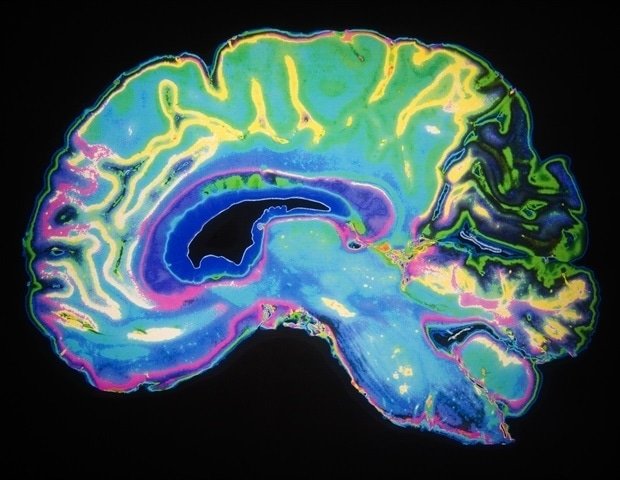



When learning how to perform new movements, our brains etch the details in our minds as we master the new task.
From a young child learning to play the piano to a novice pickleball player getting familiar with the sport’s paddle strokes, our brains inscribe neurological activity patterns as we acquire new motor skills.
Previously, neurobiologists have documented distinguishable patterns of activity in the motor cortex of the brain that emerge when we learn such specific movements. But aspects that have remained unclear include whether such patterns are responsible for generating the movement or if they simply reflect the movements driven by other regions of the brain. Additionally, is the patterned activity generated in the motor cortex or inherited from elsewhere?
University of California San Diego scientists now have an answer. Studying mice, the researchers used advanced optical methods and other techniques to analyze brain activities in unprecedented detail. The researchers isolated the specific area responsible for newly learned movements and stimulated a handful of neurons there to produce the movement, resulting in a type of “mind-reading” and “mind-control” through neuron recording and stimulation.
We found that briefly activating only about 20 carefully selected neurons in the motor cortex could trigger the larger pattern of brain activity associated with a learned movement and, in many cases, produce the learned movement itself. Considering that the mouse brain contains approximately 70 million neurons, it is surprising that such a small-scale stimulation can drive specific large-scale brain activity and behavior.”
Takaki Komiyama, senior author, professor, UC San Diego Departments of Neurobiology (School of Biological Sciences) and Neurosciences (School of Medicine)
The study, published in the journal Nature, was led by Biological Sciences graduate student Qiyu Chen and is based on research led by An Wu, an assistant project scientist in the Komiyama laboratory who tragically died in a Montreal fire in 2023.
During the study, the researchers implemented a combination of cutting-edge research techniques including two-photon calcium imaging for ultra-precise visuals of brain activity as well as a holographic optogenetic method to stimulate neurons. The advanced methods allowed the researchers to perform experiments to “read” brain activity and “write” in specific patterns down to the level of individual cells that enabled them to control movement.
As they recorded the brain signals of mice learning new movements, the researchers hypothesized that the activity identified in neurons that exhibited elevated levels of activity immediately before the animals made the movement, or “early-onset neurons,” would initiate the newly learned movement. The authors tested whether an artificial stimulation of these neurons could induce learned movement.
“We observed that the stimulation of early-onset neurons can trigger movements,” the researchers confirmed in the study. Further, they found that the success of producing the learned movement depended on the state of the motor cortex immediately before stimulation and whether the mouse being tested was engaged with the task at hand.
“The new technologies allowed us to read the activities of hundreds of neurons and write new activity into it so we can have control over the activity,” said Chen. “This gives us the advantage of being able to observe the activity of neurons during a specific behavior. We can identify the functional properties of neurons and then follow that up by selectively stimulating the neurons of our choice.”
The research continues in the Komiyama Lab with a follow-up project that seeks to investigate the connections between the key neurons. They would like to learn how the neurons are “talking” to each other to produce the learned movements.
Such research could one day help in various diseases as scientists develop brain-computer interfaces to help stroke and paralysis patients. Learning how neurons associated with movement are coordinated could eventually help elicit specific movements for daily life activities. Further, the ability to imprint specific activity in the brain could be leveraged in the future to promote learning and restore memory.
Source:
Journal reference:
Chen, Q., et al. (2026). Targeted stimulation of motor cortex ensembles drives learned movements. Nature. DOI: 10.1038/s41586-026-11174-3. https://www.nature.com/articles/s41586-026-11174-3