Forty-four years is an eternity in sports, and here it represents an interminable period of waiting and unfulfilled dreams.




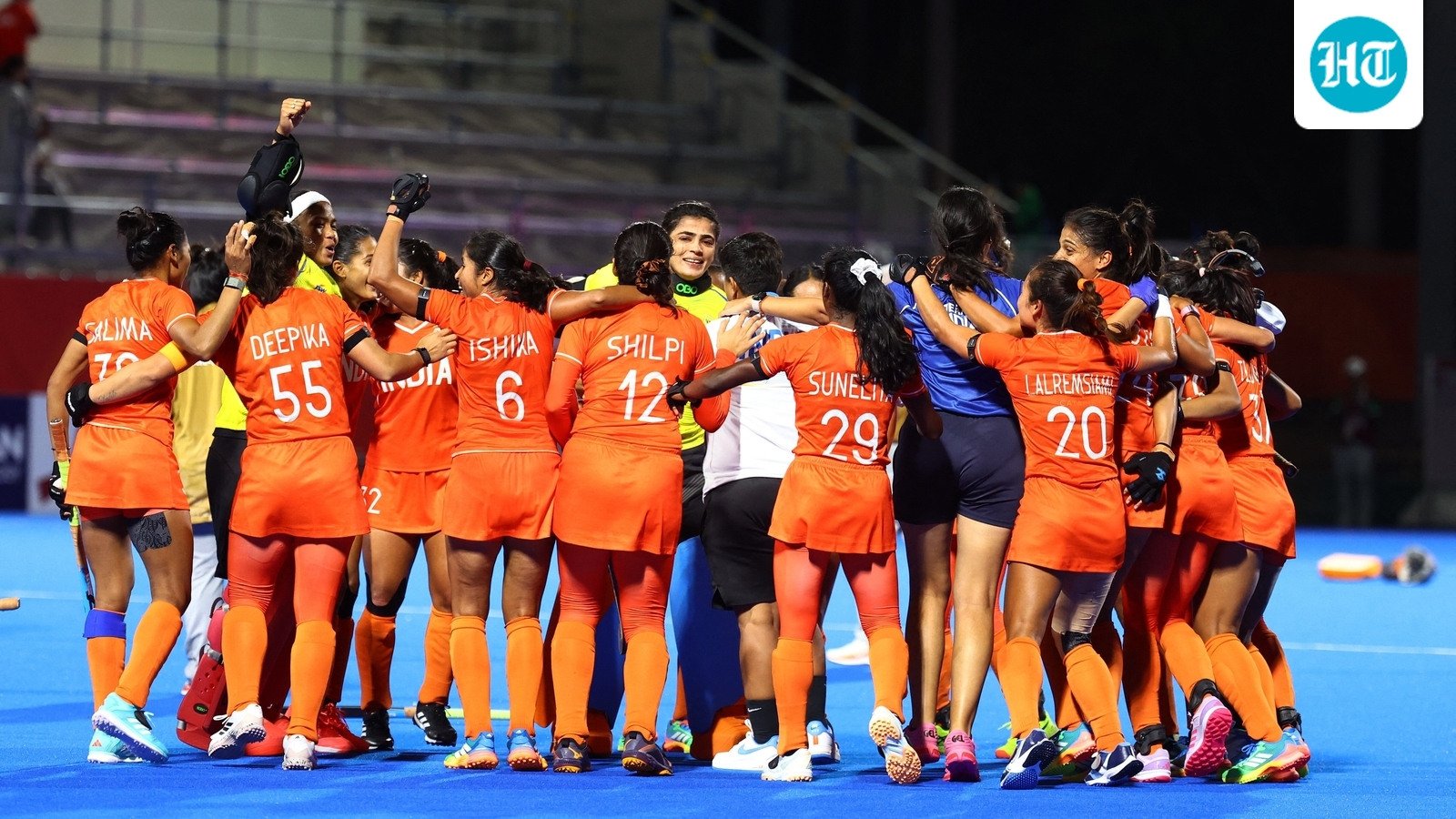
On Friday night in Kakamigahara at the Aichi-Nagoya Asian Games, that agonising wait dissolved into unbridled joy as the Indian women’s hockey team achieved glory by defeating defending champions and Paris Olympics silver medallists China 1-0 in an intense final.
With the monumental victory, they claimed their first Asian Games gold medal since their 1982 triumph at the Shivaji Stadium here when the women’s competition debuted, and with it punched a direct ticket to the 2028 Los Angeles Olympics.
The stage was set for a titanic final clash between the top two teams in Asia. On one side stood the formidable Chinese, the world No.4 whose structural brilliance had earned them silver at the 2024 Olympics.
On the other side was world No.8 India, an outfit completely reborn and on a rapid upward trajectory. High drama filled the evening air even before pushback after an accident on the highway left the team buses on way to the stadium stranded in traffic. It delayed the start by an hour. This wait seemed to sharpen the Indian team’s resolve.
When the whistle finally blew, India stepped onto the turf with fearless intent, though it was China who initially maintained control and held possession as the first quarter progressed.
But in the 10th minute, a moment of sheer magic unfolded against the run of play. India captain Salima Tete displayed grit to intercept and win the ball in the midfield. She laid it off to Sakshi Rana at the top of the circle, and she spotted a waiting Lalremsiami to the left.
Celebrating her 200th international appearance in unforgettable fashion, the 26-year-old forward controlled the pass, turned gracefully and unleashed a thunderous reverse-hit bullet. The shot soared over China goalkeeper Liu Ping into the top of the net, giving her no chance. The goal of pure audacity put India 1-0 ahead and sent shockwaves through the Chinese dugout. It was the first goal China had conceded from open play in the tournament.
India pushed further and quickly earned a penalty corner (PC). With Deepika Sehrawat not on the ground, Navneet Kaur took the hit, but the ball agonisingly went just wide of the goal.
Powered by their main attacking midfielders Li Hong and Ma Ning, who act as the team’s fulcrum, China launched waves of attacks. Orchestrated from the backline by their skipper Ou Zixia, China desperately tried to turn the match around. Yet, every single time China pressed, Indian players put their bodies on the line.
The defining moment of Chinese frustration came in the second quarter when a slight push on the back by Sushila Chanu against He Jiangxin led to a penalty stroke. Up stepped Zhang Ying against veteran India goalkeeper Savita Punia.
Zhang pushed the ball firmly to the goalkeeper’s left. But in a moment crafted from pure instinct, Savita launched herself and stuck out the left hand to brilliantly swat the ball away, the save lifting India while they were under pressure from China.
Three minutes into the second half, the drama escalated as end-to-end action ensued. China earned a PC and a reverse hit by Chen Yi struck the feet of Nikki Pradhan. Despite excellent first rushing by Salima and incredible goalline defending by Navneet Kaur, who deflected the ball, the following scramble led the umpire to point to the penalty spot.
However, goalkeeper Bichu Devi was right behind Navneet and India pointed that out while utilising a video referral to successfully get the decision overturned, and into a PC. Bichu Devi then heroically padded the ball away, India defending all three PCs in a sequence. Salima showcased incredible defensive skills before suffering a bleeding injury in her hand to be forced off the field.
Unforced errors, like an unnecessary tackle by Baljeet Kaur resulting in a green card and missed trappings, threatened to hurt India but they weathered the storm against a Chinese side that controlled the pace of the game.
As the match entered the final quarter, China displayed desperation to find an equaliser. They committed numbers forward, meaning that whenever India won the ball back, they found an empty field to run towards the Chinese goal.
The Indian defence, however, stood firm and displayed maturity. Shilpi Dabas, who made her international debut in June at the age of 28, combined excellently with Nikki in deep defence to repel the attacks. With the clock ticking down, Rutuja Dadaso Pisal cleverly boxed the ball near the corner flag to waste precious seconds.
Taking the ultimate gamble with three minutes and 27 seconds left, a worried China coach Alyson Annan pulled the goalkeeper Liu Ping to field 11 outfield players. However, Salima it was who made a breakaway run towards the empty Chinese goal, although the chance could not be converted.
Despite China maintaining possession and forcing more circle penetrations, 25 to India’s 11, India’s collective defensive fortress held unbroken until the final hooter.
With that solitary goal win, 44 years of heartbreak dissolved. After the agonising pain of missing out on the Paris Olympics qualification, a defensive masterclass has finally taken India to the summit in Asia.
The confidence that India’s Dutch coach Sjoerd Marijne, who returned to the setup in January, and his coaching staff instilled in the team played a big role in the win and Olympic qualification, which gives the team the time to build something great.