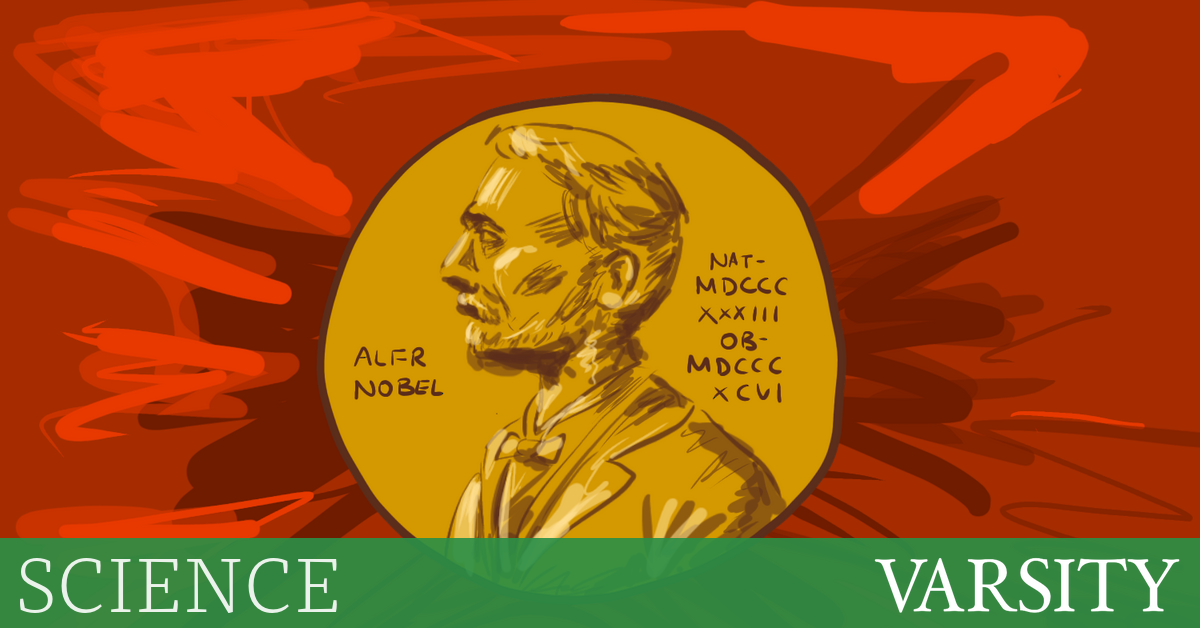




Stockholm has set the world of science abuzz this week with the 2026 Nobel Prize winners being announced. This prestigious award, which was first awarded in 1901, has recognised scientists and researchers for over a hundred years now, and succeeds in spotlighting their contributions to science for the general public.
Nobel Prize in Physics: Ice Helps Find Ghosts
The 2026 Nobel Prize in Physics this year has been awarded to Francis Halzen “for decisive contributions to the IceCube Neutrino Observatory and the discovery of high-energy neutrinos of astrophysical origin”. Neutrinos are often described as ghost particles: every second, 65 billion neutrinos from the sun flow through a space as small as a fingernail. They are everywhere, but for the longest time, it was deemed impossible to detect them. They have negligible mass and no charge, and due to this, despite being the most abundant particle in the universe, they rarely interact with matter.
Francis Halzen, a Belgian-American physicist and the principal investigator of the IceCube Neutrino Observatory, proposed that ice could be used as a medium to detect neutrinos. The IceCube detects light emitted by charged particles when a neutrino crashes into an atom’s proton or neutron. The resulting reaction produces secondary particles, which travel at speeds faster than that of light in ice, giving off a blue light called Cherenkov radiation.
“Neutrino research is critical in understanding mysteries in physics such as the matter-antimatter puzzle, the formation of cosmic structures, and dark matter”
Neutrino research has been a focus in Physics for many decades, and this is not the first time a Nobel Prize has been awarded for it. The 1995 prize was awarded to Frederick Reines for the experimental detection of the neutrino; the 2002 prize to Raymond Davis Jr. and Masatoshi Koshiba for the detection of cosmic neutrinos from the Sun and supernovas; the 2015 prize to Takaaki Kajita and Arthur B. McDonald for the discovery of neutrino oscillations, proving that neutrinos have mass. Neutrino research is critical in understanding mysteries in physics such as the matter-antimatter puzzle, the formation of cosmic structures, and dark matter.
Nobel Prize in Chemistry: Solving a Century-Old Mystery
The 2026 Nobel Prize in Chemistry has been awarded to Henri B. Kagan and Kenso Soai “for the discovery of non-linear effects and autocatalysis in asymmetric organic synthesis”.
Homochirality refers to the uniform geometric ‘handedness’ of biological molecules. For example, in amino acids, the building blocks of proteins and enzymes appear almost exclusively in the left-handed (L) form. These different forms of molecules are called enantiomers. This natural phenomenon had been a mystery in science for years. Chemists strove to devise chemical reactions that produce just one enantiomer, since this would enable enzymes, receptors, and genetic codes to lock more efficiently; however, this was only seen in nature and never able to be replicated in a lab.
“This discovery has had great implications for pharmaceutical research, as one enantiomer of a molecule may provide a medical cure, but the other can be dangerous”
In 1986, Henri Kagan, professor emeritus at the (then) Université Paris-Sud, discovered a new way of manipulating chemical reactions to create a greater excess of just one enantiomer, instead of a fifty-fifty split. This was groundbreaking. In 1995, Kenso Soai, professor emeritus at the Tokyo University of Science, designed the first chemical reaction which could be homochiral and successfully carried out such a reaction in 2003.
This discovery has had great implications for pharmaceutical research, as one enantiomer of a molecule may provide a medical cure, but the other can be dangerous. By successfully producing molecules which catalyse their own production and create an excess of a single enantiomer, Kagan and Soai have successfully solved a century-old problem.
Nobel Prize in Physiology or Medicine: Let There Be Light
The Nobel Prize in Physiology or Medicine has been awarded to Karl Deisseroth, Peter Hegemann, and Georg Nagel “for their discoveries concerning light-gated ion channels and optogenetics”.
Almost fifty years ago in 1979, Cambridge alumnus Francis Crick suggested that light could be used as a tool to control neurons, since the nature of these cells makes them difficult to be controlled by electrodes in a targeted manner. In the early 2000s, Peter Hegemann, Hertie Senior Professor of Neuroscience at the Humboldt University of Berlin, and Georg Nagel, Professor of Molecular Plant Physiology at the University of Würzburg, published an incredible paper on channelrhodopsin, an algal protein, when they were at the Max Planck Institute for Biochemistry.
“This has enabled neuroscientists to study parts of the nervous system which seemed impossible before”
When channelrhodopsin is illuminated by blue light, a channel opens through the cell and charged ions are able to flow through this channel, creating an electrical impulse. It was further discovered that these proteins can successfully be put into any cell to make it light-sensitive. A few years after this discovery, Karl Deisseroth at the Howard Hughes Medical Institute and Stanford University used the gene for channelrhodopsin in rat neurons to trigger a neural impulse in the brains of living mice.
This developed into the revolutionising field of optogenetics: controlling nerve cells with light. This has enabled neuroscientists to study parts of the nervous system which seemed impossible before: memories, feelings, complex behaviours. In medicine, there is research being conducted to apply optogenetics to restore sight in cases of visual impairment.