“Tired bodies get injured easily.”



Michael Holding’s warning to this author was blunt. The man they called Whispering Death knows what it takes to bowl fast. He also knows what the body needs to keep doing it.
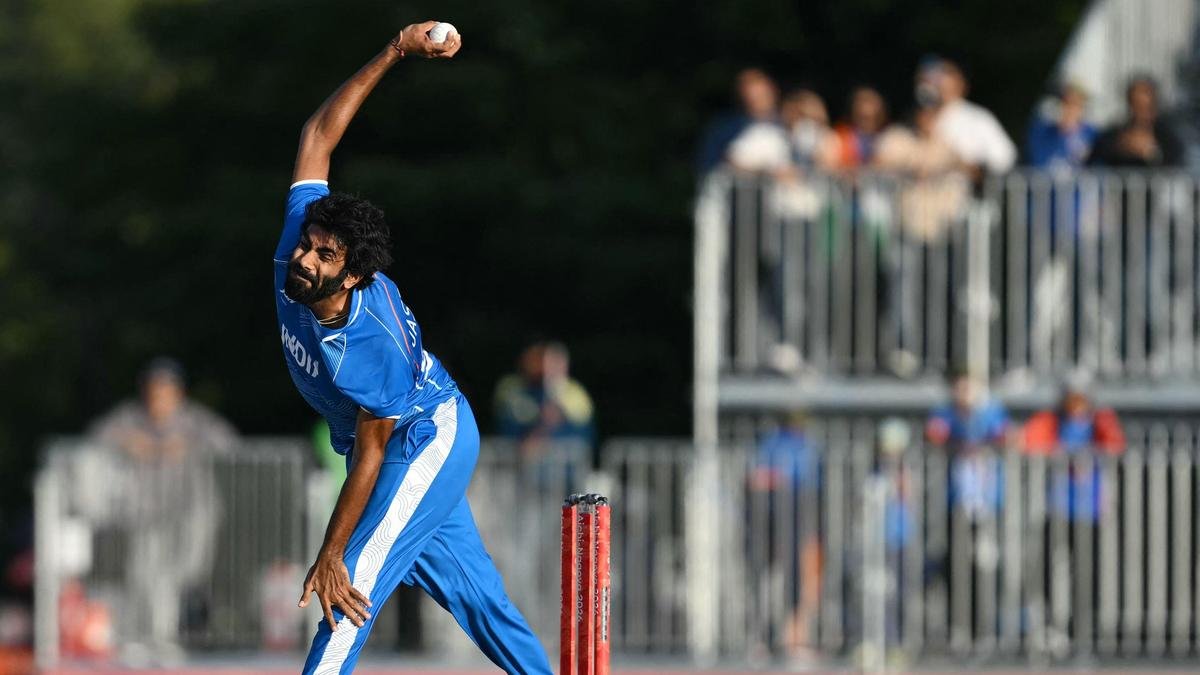
Kagiso Rabada. Hardik Pandya. Prasidh Krishna. Harshit Rana. Akash Deep. Khaleel Ahmed. What do these men have in common, besides being fast bowlers?
All six have spent time on the treatment table this year. A hamstring here. A shin there. A quadriceps, a knee, a rib, and a lower back. That is what the published reports tell us, and that is what this column can go on. But put the reports side by side, and a pattern emerges. In fast bowling, the trail almost always leads back to one place—the spine.
Every time a fast bowler’s front foot slams into the ground at the crease, the earth fights back. The ground reaction force at that instant runs to four, five, or sometimes six times the athlete’s body weight. In some laboratory studies, it runs higher still. That impact travels up the body, loading the lower spine.
For a young pacer whose bones are still developing, repeated mechanical overload can produce a lumbar bone stress injury. The pars interarticularis, a thin bridge of bone at the back of each vertebra, can develop tiny fractures under repeated strain.
Researchers have studied the link between the “mixed” action and back injuries since the late 1980s. It can wring an adolescent spine like a wet towel. Lumbar stress fractures cost pace bowlers more playing days than any other injury in the professional game.
And when the back is not the injury on the report, it can still be part of the explanation. A spine under strain can change how a bowler runs, lands, and follows through. The legs pick up the bill. That is the lens through which we will look at the six names above.
Holding has watched this unfold for five decades. First from the bowling crease, with his famously quiet run-up. Then from the commentary box.

Michael Holding about to bowl a delivery in the final of the Benson and Hedges Championship between Glamorgan and Derbyshire at the Lord’s on July 9, 1988.
| Photo Credit:
THE HINDU ARCHIVES

Michael Holding about to bowl a delivery in the final of the Benson and Hedges Championship between Glamorgan and Derbyshire at the Lord’s on July 9, 1988.
| Photo Credit:
THE HINDU ARCHIVES
The numbers behind the nickname still stand up. Sixty Tests between 1975 and 1987. 249 wickets at an average of 23.68, with 13 five-wicket hauls. At The Oval in 1976, on a flat, parched pitch, he took 14 for 149 against England. Fifty years later, it remains the best match return by a West Indian bowler. Add 142 one-day wickets at 21.36, and a place in the ICC Hall of Fame. Alongside Andy Roberts, Joel Garner, and Malcolm Marshall, he helped make West Indies pace bowling the most feared force in the game.
Asked what is going wrong with the modern fast bowler, Holding looked beyond the spine to the demands being placed on the whole body.
The action is not the villain.
With a mixed action, the hips face one way and the shoulders another. The spine has to twist and bend as the bowler delivers the ball. Holding is careful about where the blame lands.
“Smooth action, repetition, and rotation of the spine are the important components in the run-up of a fast bowler,” he said. The run-up, in his telling, is not a sprint to the crease. It is the first link in a sequence. If it flows, the rest of the body flows with it. If it stutters, something downstream absorbs the shock.
Speaking specifically about back problems, Holding reached for history to make the point. “Fred Trueman, Sir Wes Hall, Sir Garry Sobers all bowled with a side-on action and never sustained injuries,” he said. Then came the line that cuts against a popular assumption.

Fred Trueman, an England fast bowler, seen delivering with a side-on action.
| Photo Credit:
THE HINDU ARCHIVES
Fred Trueman, an England fast bowler, seen delivering with a side-on action.
| Photo Credit:
THE HINDU ARCHIVES
“It is not the chest-on or the side-on action that predisposes a bowler to injury.”
That distinction matters. The concern is how the upper and lower body movements work together and how much strain the spine must absorb.
The Ian Bishop lesson
Holding did not need a textbook to explain the mixed action. He had an example from the generation that followed his own.
Ian Bishop was one of the most frightening sights in world cricket in the early 1990s. Tall, quick, and relentless. He was also, by Holding’s account, an example of the strain an uncoordinated action can place on the back.
“The top half of his body was square,” Holding said. “That put more pressure on his back. It resulted in a mixed action, and everything did not flow fast.” The lower half was going one way. The upper half was going another. The lumbar spine sat in the middle, twisting to make up the difference.
READ: Harmanpreet Kaur steps down as India captain from all formats
His career was interrupted twice by stress fractures of the back. Bishop remodelled his action and returned, but those injuries took a heavy toll. Today he is one of the most respected voices in the commentary box. His story remains a cautionary tale about the load a pacer’s back must carry.
Holding had retired from international cricket by the time Bishop arrived, but he watched it happen and read it for what it was.
The trauma travels
The strain can travel beyond the back. The body is a kinetic chain. When a bowler alters his mechanics to protect a healing spine, the burden on his legs can change. Hamstring strains remain among the most common injuries in professional cricket.
The strain reaches upward too. The aggressive sideways bend at delivery, combined with the violent downward pull of the non-bowling arm, can tear the internal oblique where it anchors to the lower ribs. Occasionally it rips a flake of bone clean off the rib itself.
The chain of cause and effect is not always as neat as it looks on a physio’s whiteboard. But the pattern is familiar to anyone who has watched a bowler return from one injury and break down with another. One compensation can lead to the next. The body keeps paying until something gives.
The calendar takes its toll
Much of the answer lies in the calendar. Workload research, much of it from Australia, has linked heavy bowling loads and sharp increases in workload with a greater risk of injury.
A bowler’s workload has to match what his body is prepared to tolerate. Regular bowling builds that capacity. A sudden increase, especially after time away, can demand more than the body is ready to give. Too much bowling without enough recovery adds to the strain. Conditioning, gradual progression, and rest have to work together.
Holding did not use the word “workload”. He did not need to. Asked what the current crop is doing that leaves them so exposed, his answer was blunt.
ALSO READ: No time to rest: India dives into West Indies T20I series after Asian Games glory
“A lot more bowling is taking place,” he said. “They are overworking their bodies. Tired bodies get injured easily. If you are not in full control of your body, injuries will occur.”
That last sentence captures the concern. Fatigue can erode control. Timing slips. Movements that normally work together become harder to coordinate. The clean, repeatable action that Holding prizes becomes harder to sustain. The research and his experience point to the same need: a body prepared for the load, with time to recover from it.
The casualty list
Back to the six names at the top.
Kagiso Rabada tore his right hamstring in winter training in August. Reports described a severe Grade 3 tear. It came less than a year after a rib stress injury kept him out of the Tests in India. South Africa has named him in a preliminary squad for the Australia series, but the coach has said he will not be rushed. Several other Proteas quicks have been nursing hamstring injuries.

Hardik Pandya has been struggling with injuries for a while now.
| Photo Credit:
PTI
Hardik Pandya has been struggling with injuries for a while now.
| Photo Credit:
PTI
Hardik Pandya has not played competitive cricket since the IPL—a quadriceps injury after the tournament was followed by a shin problem during his comeback. Reports in September described a bone stress response in the right tibia. His availability for the New Zealand tour remains uncertain.
Prasidh Krishna, who lost much of 2023 to a lumbar stress fracture and surgery, was ruled out of the third ODI against West Indies with a left hamstring injury sustained in the second match.
Harshit Rana underwent knee surgery in February. After returning, he suffered a hamstring injury during the England tour. Then came another setback. The BCCI confirmed that he strained the rectus femoris, one of the quadriceps muscles, while bowling in a match simulation on September 7. He was ruled out of the Afghanistan T20Is and the Asian Games.
ALSO READ: India A vs Australia A: Ruturaj and Co. eye first-team spots ahead of ODI World Cup 2027
Akash Deep missed the IPL with a lower back stress injury. He returned for Rest of India in the Irani Cup, which ended on October 4. After recovering from a lower back stress fracture, he was playing his first match in nearly eight months.
Khaleel Ahmed tore a quadriceps during the IPL.
Different bodies, different points of failure. Rana’s setbacks show how difficult the route back can be. Akash Deep’s long absence brings us directly to the crux of this column. The spine needs time to heal. The rest of the body needs to be prepared to bowl again.
Tyres, tubes, and the old gym
There is a lazy assumption that the fearsome West Indian fast bowlers simply turned up and bowled. That their bodies were a gift of nature and nothing more. Holding bristles at that.

The deadly West Indian quartet (left to right): Ian Bishop, Malcolm Marshall, Courtney Walsh and Curtly Ambrose.
| Photo Credit:
THE HINDU ARCHIVES
The deadly West Indian quartet (left to right): Ian Bishop, Malcolm Marshall, Courtney Walsh and Curtly Ambrose.
| Photo Credit:
THE HINDU ARCHIVES
“When we used to terrorise batters, that group also worked out,” he said. “Not the fancy gyms. We did our strengthening using tubes and tyres. We did not have the fancy hotels and gyms. But we did our strengthening exercise routine, and we did it regularly.”
The tubes were the inner tubes of car tyres. They cut them into strips and tied them off. Pull one, and it resists you. Pull harder, and it resists more. It is the same principle as today’s resistance bands. Modern strengthening programmes use resistance to help protect a bowler’s posterior chain, the hamstrings, glutes and lower back that carry the load.
That is the point sports medicine often misses when it talks about the past. Holding, Roberts, Garner and Marshall did not have today’s resources. They had the habit—strong, conditioned bodies, trained regularly. The modern bowler has better equipment. He still needs the same basics and time to recover.
Play less. Choose.
So what would Holding tell a 22-year-old with a 150 kph arm and a calendar that never ends? His answer was short.
“Play less cricket,” he said. “Choose what formats you want to play. You cannot play all of them. The body needs recuperation.”
That advice gives the workload research a human voice. Prepare the body. Build the load gradually. Allow recovery. A schedule that repeatedly asks a bowler to move between formats and competitions has to leave room for all three. Holding understands it from experience.
Research supports the need to manage the load. The sport has to make that knowledge count.
The adolescent spine can be protected. The loads can be managed. We know how. But until the calendar makes room for recovery, the game will keep losing its most explosive talents to breakdowns that better preparation and more thoughtful scheduling could help prevent.
The ground will keep fighting back. The question is whether anyone running the sport is willing to stop asking the body to fight it so often.
Published on Oct 06, 2026