I remember reading the words brain metastases on my phone between surgical cases. As the message arrived, the hospital corridor around me continued its ordinary rhythm. Doors opened and closed. A trolley rattled past toward the next theatre. Somewhere down the hall, a pager sounded and I heard footsteps quickening in response. The axis of my life had been upended but the building around me appeared oblivious.



I read the message again as though repetition might change its meaning. A few minutes later, I washed my hands, retied my mask and returned to theatre. Instruments passed into my palm in familiar sequence: suction, bipolar, clip. My hands followed movements rehearsed thousands of times before.
The tumour had not begun that morning. I knew from my training that, long before those words appeared on my phone, the biological processes that produced them had been unfolding inside my mother’s body.
Since that pivotal day, I keep thinking about the way that collapse often feels sudden, but how rarely that’s the case in living systems. What appears to us as abrupt failure is usually the delayed visibility of strain that has been accumulating for years.
This pattern appears repeatedly across biology and psychology. What looks like stability from the outside reflects hidden systems absorbing strain – what physiologists call homeostasis – until their capacity to compensate is finally exceeded. Systems theorists describe this as movement toward a critical transition. When the threshold is eventually crossed, change can seem abrupt even as underlying instability grows.
Neural circuits possess a remarkable ability to reorganise themselves in response to disruption
Most cancers originate through the gradual accumulation of mutations within individual cells, altering the mechanisms that normally regulate growth, division and repair. Yet the presence of these mutations does not immediately produce illness. Surrounding cells continue performing their roles, the immune system eliminates many abnormal cells, and the architecture of the tissue subtly reorganises itself to preserve organ function. A tumour may therefore grow for years while the organ continues to appear functionally intact. The person carrying it may feel entirely well until that balance is finally exceeded.
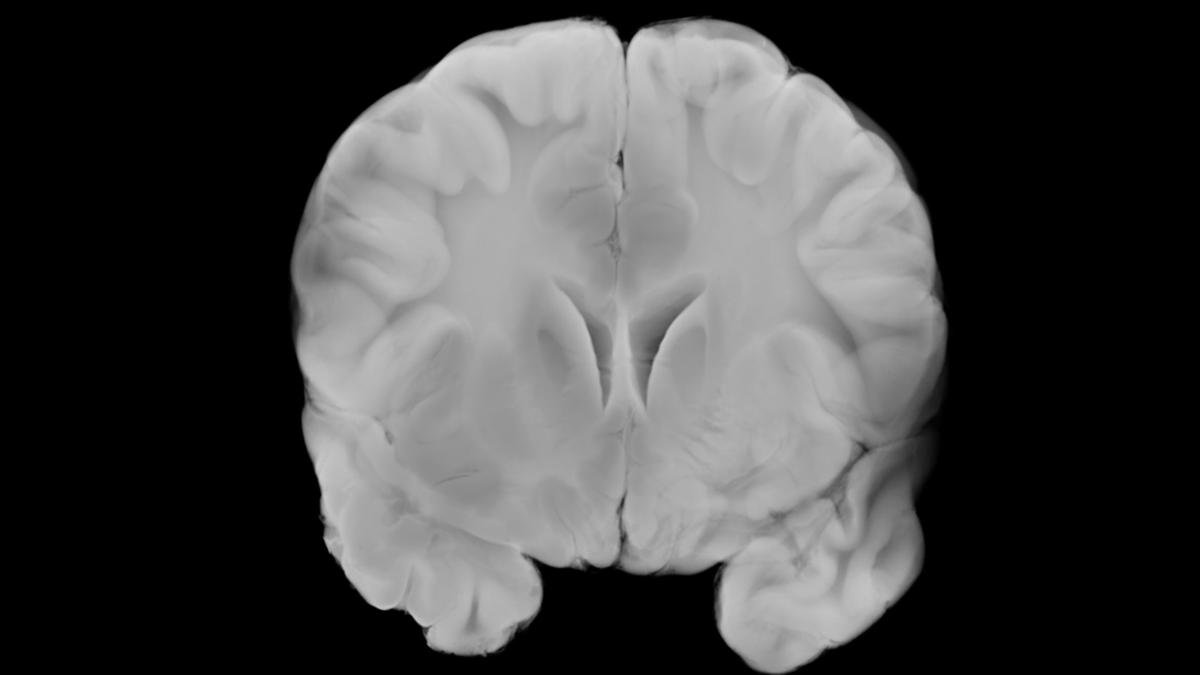
In the brain, this dynamic becomes especially striking. Unlike many other tissues, neural circuits possess a remarkable ability to reorganise themselves in response to disruption, sometimes preserving cognition even after profound structural loss. Brain tumours do not merely compress or destroy surrounding tissue. Instead, tumour cells interact directly with surrounding neural circuits, responding to the brain’s electrical activity and integrating into existing networks.
In patients whose tumours infiltrate the language cortex, recordings made during surgery show speech-related activity extending beyond the regions normally responsible for language. As the tumour disrupts the local circuitry, neighbouring networks are recruited to help sustain performance. Language processing therefore becomes distributed across a wider system as the brain attempts to preserve function.
For a time, this redistribution allows cognition to continue functioning normally. Patients may continue speaking, reasoning or navigating their environment even as a disease progresses within the structures that support those abilities. Only when the system can no longer redistribute that burden does the disruption become suddenly obvious.
The brain’s response to sustained psychological pressure follows the same principle. As stress hormones reshape activity across the brain, control gradually shifts away from networks centred in the prefrontal cortex, which support flexible reasoning and deliberate decision-making. At the same time, hippocampal systems that normally provide contextual memory become less influential. In their place, greater influence shifts toward circuits associated with habit and routine, particularly within the striatum.
Crucially, these changes rarely feel pathological at first. On the contrary, they often appear as discipline or productivity. Under chronic stress, you might work longer hours, concentrate more intensely on urgent responsibilities, and postpone activities that don’t seem immediately necessary. Because your outward performance is preserved, the underlying strain remains largely invisible, both to you and those around you.
It was during a stressful period of life that a doctoral student eventually came to see me in clinic, worried that something might be wrong with her brain. Over recent weeks, this young woman had experienced a series of small but unsettling lapses. Midway through a research presentation, she’d lost the thread of her argument and struggled to continue, despite knowing the material well. On another occasion, she missed a familiar turn while driving home along a route she had taken hundreds of times before, and for several seconds could not understand why she was on the wrong road.
Too often, strain is absorbed by those who are more vulnerable and least able to resist it
Rather than interpreting these experiences as due to stress or exhaustion, she began to imagine neurological explanations. Perhaps there was a tumour growing silently. Perhaps the lapses signalled the early stages of cognitive decline. The possibility of a hidden lesion seemed more plausible to her than the idea that her working conditions might explain the change. In medicine, we are trained to look for disease inside the body; it is often harder to recognise the ways environments can reshape how the mind functions.
Thankfully, her imaging was entirely normal. There was no mass, no oedema and no structural abnormality that could account for the symptoms she described. From a neurological standpoint, the scans were reassuring. Yet the experiences that had frightened her were real, and they required explanation.
When she later described the months leading up to these episodes, her story began with a meeting that was supposed to be routine. Her supervisor had suggested it, saying the director of graduate studies would attend to clarify expectations. At first, the conversation seemed procedural. They thanked her for coming and spoke about standards, competitiveness and the importance of maintaining momentum.
As she described the meeting to me, what stood out was how the senior academic’s language gradually shifted. Delays in my patient’s progress were described as ‘patterns’. Questions she had raised about supervision were reframed as signs of her ‘dependency’. No one raised their voice, but by the end of the meeting, the challenges of the doctoral programme had somehow been reframed in terms of questions about her resilience. You might have seen these dynamics yourself. In hierarchical institutions, strain rarely travels upward to those in power. Too often, it is absorbed by those who are more vulnerable and least able to resist it.
In the wake of the meeting, my patient told me how her sleep shortened, meals became irregular and how she’d given up leisure activities to devote more time to her studies. Her attention narrowed toward immediate demands and, for a time, the strategy worked. Those lapses that frightened her were the first signs of the strain becoming visible. They marked the moment when a nervous system that had been compensating for too long could no longer sustain the effort.
After I’d reassured her that there was no evidence of a tumour or degenerative disorder, the true explanation for her symptoms became easier to consider, though not necessarily easier for her to accept.
However, several months later she returned briefly to the clinic to thank me. She mentioned how, after the scans, things had begun to improve. With encouragement from family and friends, she’d made small adjustments: reduced some commitments, restored a more regular pattern of sleep, and gradually reintroduced routines that had once structured her days but had disappeared during the months of greatest pressure.
A mind that had been compensating for too long had begun to regain its equilibrium
The improvements were gradual. Tasks that had once felt disproportionately demanding slowly returned to their familiar scale. Reading, concentrating and speaking no longer felt such an effort. Conversations unfolded without the need to rehearse sentences internally before speaking. The small cognitive hesitations that had alarmed her began to recede.
Listening to her describe these changes, it sounded to me like her cognitive flexibility was returning. Her attention had widened again, making it easier to hold multiple ideas in mind and move between them without effort. What looked like renewed motivation was in fact the restoration of regulatory capacity. A mind that had been compensating for too long had begun to regain its equilibrium.
My patient’s experience can be understood from an evolutionary perspective. The tendency of living systems to compensate rather than immediately fail reflects a fundamental biological and psychological priority: survival in the present moment often takes precedence over preserving optimal function across the lifespan, even if this means damage accumulates over time. Continuing to function despite accumulating strain can be more advantageous than signalling distress too early.
The same principle operates across many levels of biology. Cells continue dividing despite accumulating mutations if doing so preserves tissue integrity. Neural circuits recruit neighbouring regions when networks are compromised, and psychological systems narrow attention toward urgent demands when environments become overwhelming.
When I received the message telling me that my mother had developed brain metastases, it felt like a dividing line between one life and another. Yet what stayed with me was not only the diagnosis itself, but the realisation that it had arrived so late in the story. By the time those words appeared on my phone, the disease had already been shaping her life for months, perhaps years, while her body continued to adapt in ways neither of us could see. The news felt sudden; what it revealed was anything but.
That realisation altered the way I thought about apparent stability. Over the years, I found myself returning to that same observation in many different settings. Not because cancer and psychological strain are the same phenomenon, nor because they arise from identical biological mechanisms, but because both reveal something fundamental about living systems: the work required to preserve function is often least visible when it is succeeding.
Understanding this does not allow us to foresee every collapse before it occurs. It may, however, change what we pay attention to. The earliest signs of strain are often easy to overlook because they arrive disguised as ordinary adaptations. Life becomes increasingly organised around what feels necessary. What is urgent begins to crowd out what is restorative, and the resulting narrowing can easily be mistaken for dedication, productivity or resilience.
Seen in this light, care involves more than responding to visible distress. It also means attending to what is gradually disappearing: opportunities for rest, moments of curiosity, sources of connection and renewal. The things that give life depth, texture and meaning are often the first things surrendered in the effort to keep going.
Perhaps this is why collapse so often feels sudden. What we witness is not the beginning of a failure but the culmination of a long period of accommodation. We notice the moment a structure gives way, not the years it spent holding itself together.