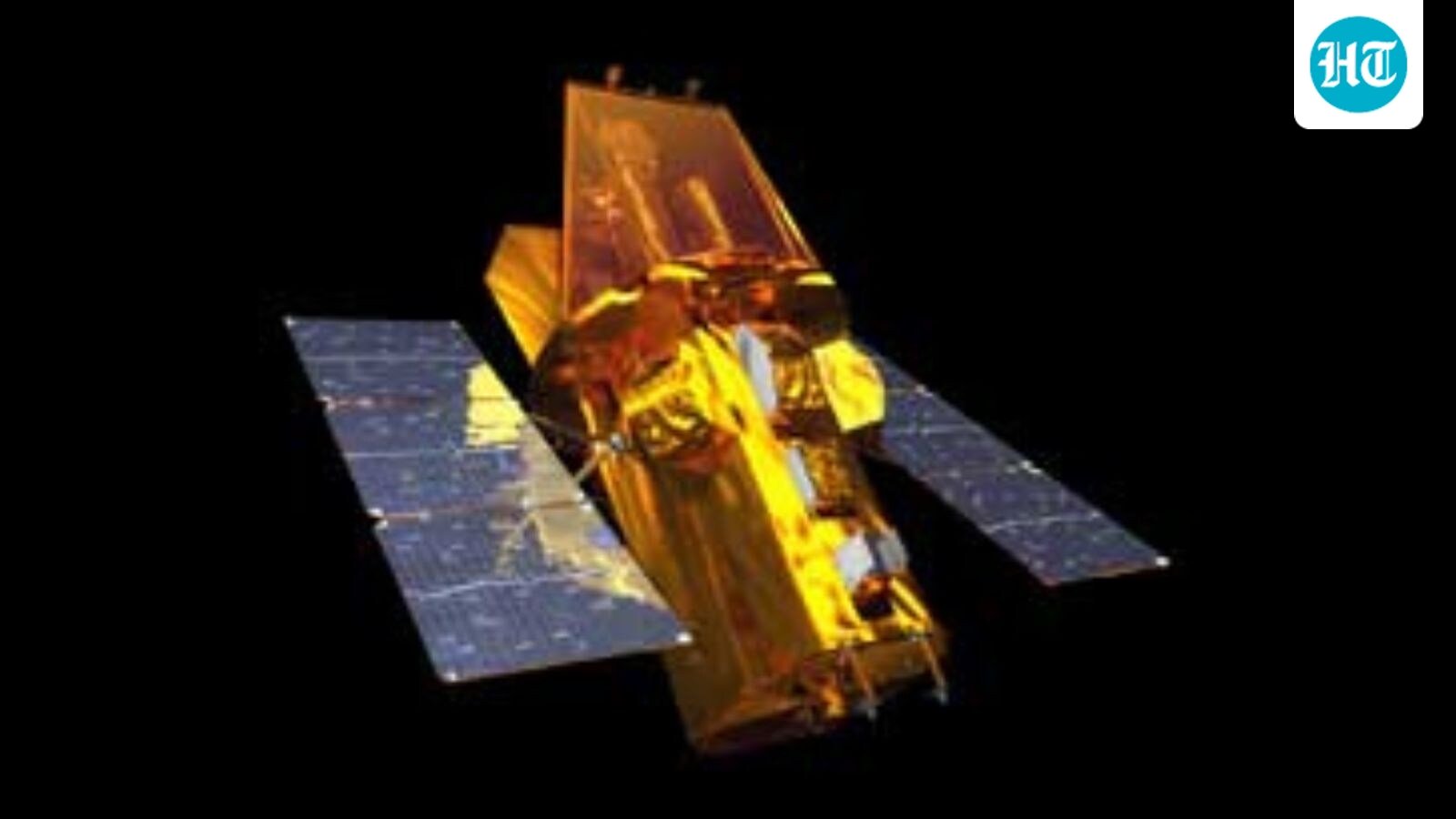
Nasa’s Swift Observatory, a 22-year-old space telescope that a rescue mission failed to save, is expected to fall back into Earth’s atmosphere on or around Friday, November 6, and India is among the regions under the broad band where any surviving pieces could come down.



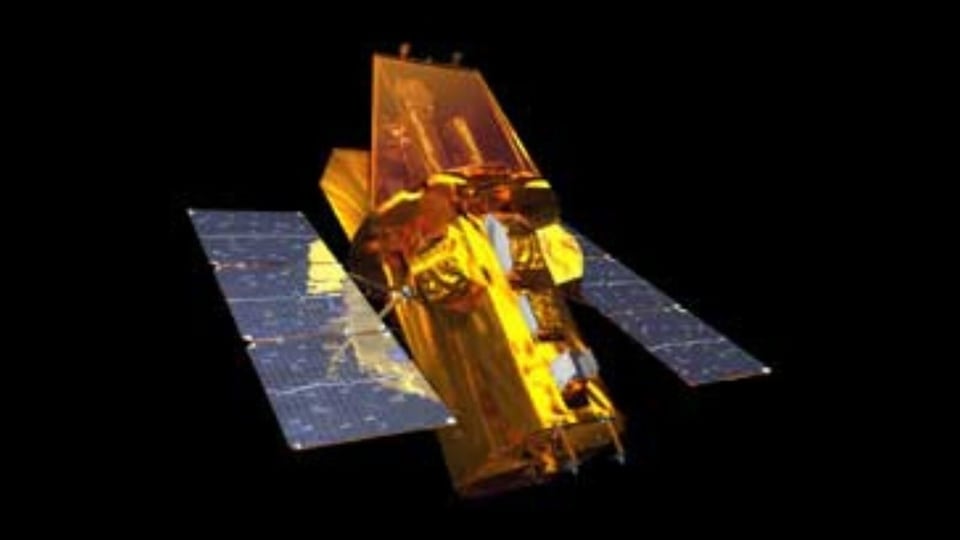
Parts of Africa, Australia, Southeast Asia, and Central and South America are also within the predicted zone, according to the Associated Press. Most of the 1.4-tonne telescope is expected to burn up as it falls, but a handful of pieces made of tungsten, a metal denser than lead, and some mirror parts could survive the heat, Brad Cenko, Swift’s principal investigator at Nasa’s Goddard Space Flight Center, told AP. Fragments that do survive are most likely to fall into the ocean.
The US Space Force, which is tracking the telescope’s decaying orbit, predicts that it will come down on or around Friday, AP reported. The date may still shift as the telescope sinks lower.
Falling back to Earth
Swift was launched on November 20, 2004, to study gamma-ray bursts, among the most powerful explosions in the universe, as well as supernovas, the explosions of dying stars, and other high-energy events in space. Nasa says it was designed for a two-year primary mission.
Its orbit began to decay faster than expected because of atmospheric drag, which solar storms over the past few years magnified, according to Nasa.
Nasa then hired Katalyst Space, a space technology company, to attempt a rescue. The company built Link, a three-armed robotic spacecraft that was launched in July 2026 to reach Swift and raise its orbit. In August, Nasa said Link would not capture or boost Swift because of a problem with the spacecraft’s attitude control, the system that keeps it pointed in the right direction. Link could not get closer than about 12 to 15 kilometres to the telescope and re-entered Earth’s atmosphere in September, AP reported.
Swift resumed scientific observations after the rescue was abandoned. It made its last observation on October 20, and Nasa ended the science mission once the telescope was orbiting less than 275 kilometres above Earth, where the greater drag kept its instruments from holding steady on their targets.
Over its 22 years in orbit, Swift detected more than 2,000 gamma-ray bursts and 1,400 exploding stars, and observed comets, asteroids and black holes, according to AP. Its name comes from its ability to swivel quickly towards erupting events in space. It also worked as an early-warning system for other observatories, including the Hubble and James Webb space telescopes, which followed its alerts to study cosmic events in greater detail.
John Nousek, an astronomer at Pennsylvania State University who directed Swift’s mission operations, told AP that scientists had known since before the launch that the observatory would eventually have to come back to Earth.
Also read: 46,590 tracked objects, another 1.2 million we can’t see: The mess humans have created in space
The process, and the path
Satellites and other objects in low Earth orbit don’t stay there indefinitely. Thin air at that height still exerts drag, which slows them down and gradually lowers their orbits. As they descend into denser layers of the atmosphere, they heat up intensely and begin to break apart.
Most components are destroyed before they reach the ground. But some materials and parts can withstand the heat. In Swift’s case, Cenko said, tungsten components and parts of its mirrors could survive.
Nasa’s Orbital Debris Program Office, which studies debris in orbit, says surviving fragments are most likely to fall into oceans or sparsely populated areas. Re-entering debris can pose a risk to people and property, but Nasa says the chance of any individual being struck was low.
India in the debris zone
A re-entry zone is the stretch of the Earth’s surface that a falling object could pass over in its final orbits. It shows where debris might come down, and it does not mean debris will fall in any particular country within it.
Swift’s orbit is tilted at 20.6 degrees to the equator, according to Nasa, and its path never takes it farther north or south than about 20.6 degrees of latitude. In India, that band takes in the part of the country roughly south of a line from Daman on the west coast to Cuttack in Odisha. Mumbai, Hyderabad, Bengaluru and Chennai lie inside it. Delhi, Kolkata and the rest of north India do not.
Within that band, the exact place and time of re-entry stay uncertain until the final hours, since small changes in drag and in how the telescope tumbles and breaks apart can shift where it comes down. Most of the band is ocean, and surviving fragments are most likely to fall into the sea.
India can follow re-entering objects too. The Indian Space Research Organisation’s Multi-Object Tracking Radar at Sriharikota tracks rocket bodies and satellites “during their last few orbits before atmospheric re-entry, wherever feasible”, according to the space agency’s latest situational awareness report.
Also read: Minnesota farmer discovers massive metallic ‘space object’ in cornfield, federal agencies notified
Tracking and monitoring
Space agencies and tracking organisations monitor objects in orbit with radar, telescopes and orbital data, which they use to estimate an object’s altitude, speed, path and likely re-entry window.
Predicting where surviving fragments will fall is difficult, especially in an uncontrolled re-entry.
An object can come back to Earth in two broad ways:
- Controlled re-entry: operators deliberately lower the object’s orbit and steer it towards a remote area, usually over an ocean, to reduce the risk of debris reaching populated places.
- Uncontrolled re-entry: the object loses altitude through natural orbital decay and falls into the atmosphere without operators being able to steer its final descent. Swift is coming down this way.
Tracking an object, then, does not mean authorities can control where its surviving fragments fall.
The US Space Surveillance Network tracks larger pieces of orbital debris, generally those bigger than 10 centimetres, according to Nasa. Smaller fragments are too difficult to follow individually, and their numbers are estimated from radar measurements and statistical models. Nasa estimates that around 50,000 large, trackable objects orbit the Earth, along with about 100 million pieces of debris around a millimetre in size.
How often this happens
On average, more than three intact satellites or rocket bodies re-enter Earth’s atmosphere every day, according to the European Space Agency’s (ESA) Space Environment Report 2026, published in September and based on data to the end of 2025. The report also recorded about 10 new payloads being launched into orbit every day, and said the risk of a casualty on the ground from re-entering debris had grown in recent years with space traffic, although the numbers remain low compared with everyday risks.
In April 2022, a metal ring 2 to 3 metres across and a metal sphere fell in a village in Maharashtra’s Chandrapur, and a second sphere in another village nearby. No one was hurt.
In March 2024, a piece of hardware crashed through the roof of a house in Naples, Florida. Nasa later confirmed it was a stanchion, or support, used to mount batteries on a cargo pallet that the International Space Station had discarded in 2021, and which Nasa had expected to burn up completely on re-entry.
Preventing space debris
In April 2024, at a meeting in Bengaluru of the Inter-Agency Space Debris Coordination Committee (IADC), a forum of the world’s space agencies, S Somanath, then chairman of the Indian Space Research Organisation (Isro), announced the Debris Free Space Missions initiative. It aims for debris-free space missions by all Indian space actors by 2030, and its guidelines call for “either controlled re-entry or de-orbiting” of spacecraft and rocket bodies at the end of their lives.
One example was Cartosat-2, an Earth-observation satellite launched in 2007. Isro used its leftover fuel to lower the satellite’s orbit, and it re-entered the atmosphere over the Indian Ocean on February 14, 2024, in what Isro called a “controlled re-entry experiment”. Left on its own, the satellite would have taken about 30 years to come down naturally, according to Isro, which expected all its major components to burn up during the descent.
Isro’s Indian Space Situational Awareness Report 2025, released on April 8, 2026, recorded 1,911 catalogued objects re-entering Earth’s atmosphere in 2025: 1,002 known spacecraft, 657 pieces of debris, 108 rocket bodies and 144 objects of unknown nature. Twelve were Indian, including satellites, rocket stages and debris.
The report said Isro was continuing work under the Debris Free Space Missions initiative to ensure that Indian missions, including those run by private companies and academic institutions, adopt measures to avoid creating debris by 2030. These include keeping enough fuel on low Earth orbit satellites for them to be deorbited at the end of their missions. Isro is also building up its ability to watch objects in orbit through its Network for Space Objects Tracking and Analysis (Netra), under which an optical telescope is being set up at Hanle in Ladakh.