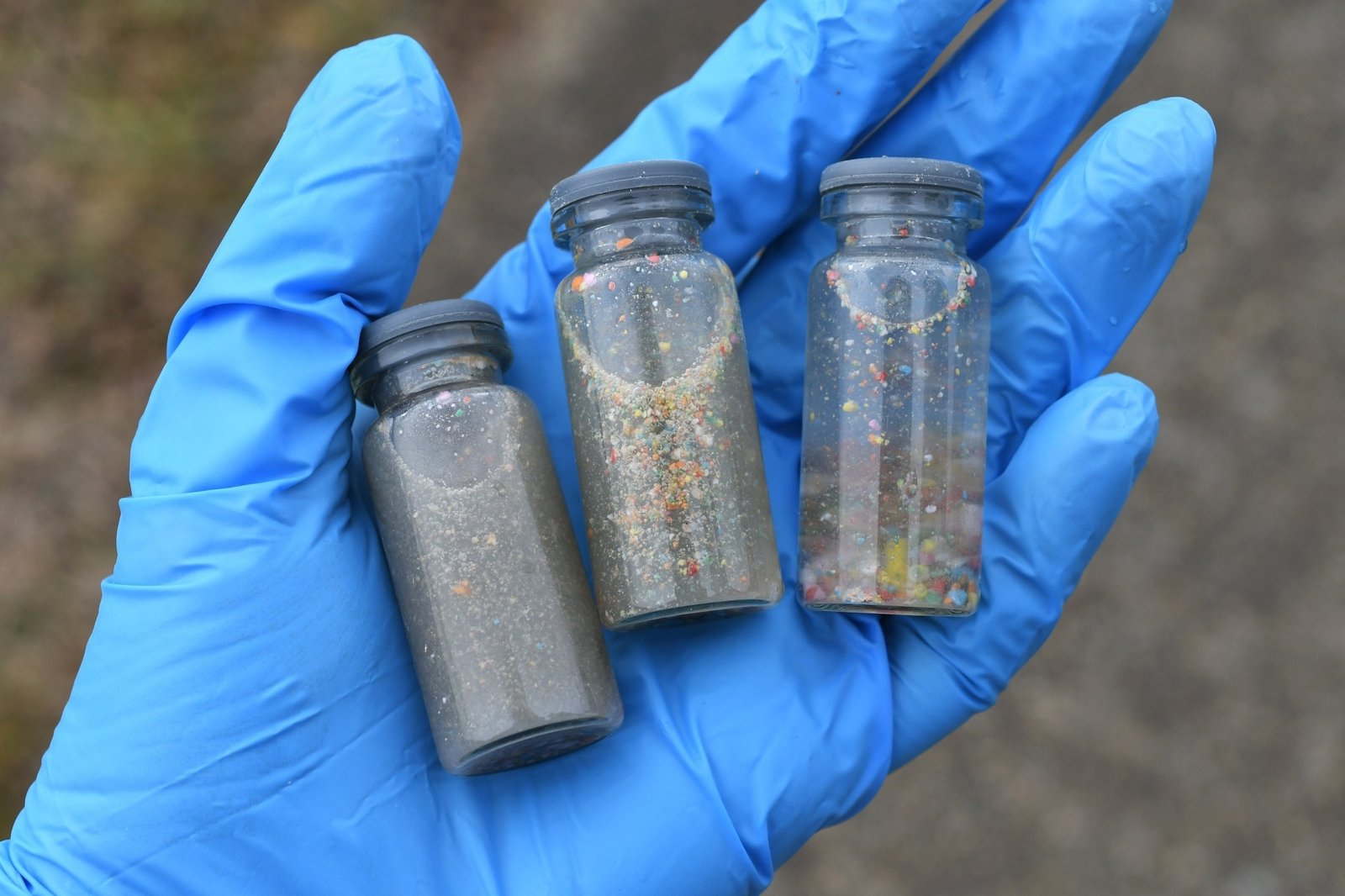
From microscopic surface charges to experiments with proteins and blood cells, researchers investigate what happens when everyday plastics come into contact with water.



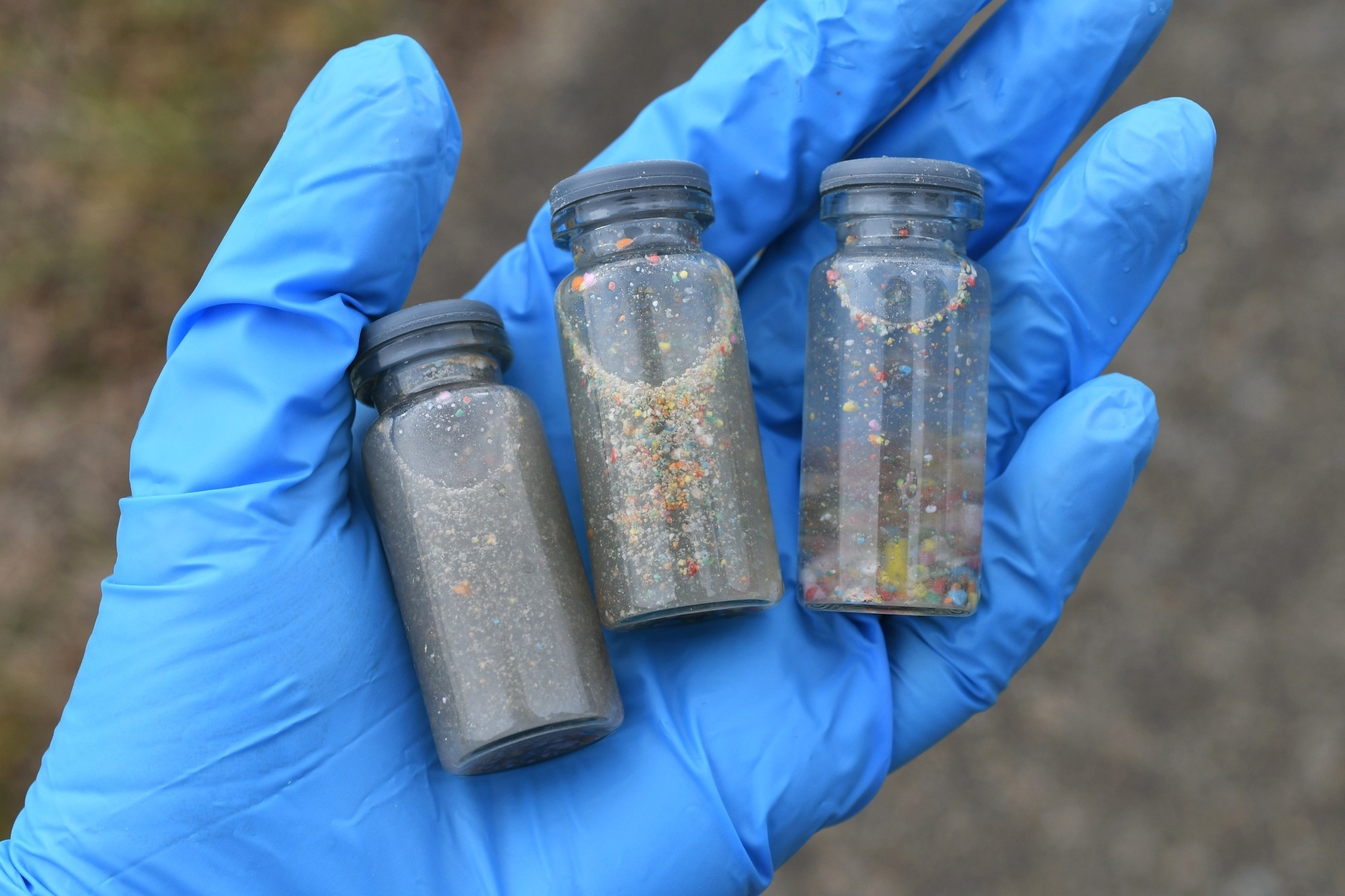
Study: Intrinsic physicochemical activity at microplastic–water interfaces. Image Credit: MargJohnsonVA / Shutterstock
A recent study published in the journal Nature demonstrated that commodity microplastics exhibit intrinsic physicochemical activity in water. At microplastic–water interfaces, reactive oxygen species (ROS), including hydroxyl radicals (•OH), are generated spontaneously, with radical production continuing over time. Radical formation also increases with surface hydrophobicity. This surface activity may help explain how microplastics interact with proteins and other biomolecules, potentially affecting protein structure and cell health.
Plastics are widely used because of their chemical resistance and durability. Fragments smaller than 5.0 mm, known as microplastics, have raised environmental and health concerns. Laboratory studies have linked microplastic exposure to cellular stress, inflammation, and cytotoxicity, while observational research has reported associations with cardiovascular problems, reproductive damage, neurological disease, and inflammatory bowel disease. These findings do not establish causation. Their detection in human tissues and environmental samples highlights the need to understand their potential effects.
About the study
In the present study, the researchers investigated whether microplastics are truly inert by examining how six common plastics interact with water: polypropylene (PP), polyethylene (PE), polyvinyl chloride (PVC), polystyrene (PS), polyethylene terephthalate (PET), and polymethyl methacrylate (PMMA).
Molecular dynamics simulations and ab initio calculations examined relationships between microplastic surface chemistry and interfacial water. Vertical ionization energy (VIE) calculations estimated the energy required for hydroxide ions (OH−) to lose an electron and form •OH, while electron spin resonance (ESR) spectroscopy detected radicals generated by PS microplastics in water, using 5,5-dimethyl-1-pyrroline-N-oxide (DMPO) as a radical trap.
The team used aminophenyl fluorescein (APF) and confocal microscopy to visualize •OH generation at PS surfaces. Triton X-100, a surfactant, was added to assess whether modifying the microplastic–water interface altered radical generation. The researchers assessed PS surface charge through electrophoretic zeta-potential measurements, which indicate electrical potential near particle surfaces, and used the fluorescent dye Rhodamine 800 (Rh800) to visualize interfacial charge effects, while X-ray photoelectron spectroscopy assessed surface purity. Published water contact-angle values were used to examine the relationship between hydrophobicity and APF-detected interfacial activity.
To examine changes in protein structure, the researchers tracked lysozyme aggregation using the fluorescent dye Thioflavin T (ThT). Caffeine, a radical scavenger, was added to investigate whether free radicals produced at plastic surfaces contributed to this process. In a separate experiment, red blood cells (RBCs) obtained from mice were exposed to different microplastics to assess their hemolytic activity.
Results
The experiments detected radical generation at microplastic–water interfaces, and fluorescence measurements indicated greater activity at more hydrophobic surfaces. Ab initio calculations supported this relationship, suggesting that partial solvation and electrostatics lowered hydroxide ionization energies at increasingly hydrophobic interfaces. Nearby electron acceptors, including dissolved oxygen, may help facilitate the proposed radical-forming reactions. PMMA, the most hydrophilic polymer tested, showed the lowest interfacial activity, whereas PE exhibited a more negative zeta potential and a larger low-VIE population.
Methyl orange degraded by nearly 90% within 10 days in water containing PS microplastics under continuous stirring, with the solution changing from light yellow to nearly colorless. This degradation was not observed in other common solvents. Surface-localized fluorescence increased over time, supporting ongoing •OH generation at PS–water interfaces, which may explain the methyl orange degradation.
In water and 1.0 mM NaCl solution, PS microplastics showed a strongly negative zeta potential, suggesting negative charge accumulation at the interfaces. Rh800 enrichment further supported charge separation near the particle surfaces. At a surfactant concentration of 0.1%, ROS generation, Rh800 enrichment, and local APF fluorescence all declined markedly. The zeta potential also shifted toward zero, indicating changes in the interfacial properties.
All six microplastic types showed evidence of spontaneous radical generation, although PP and PE were more reactive than PMMA and PET, consistent with differences in polymer hydrophobicity. In addition to deoxyribonucleic acid (DNA) oligomers, biomolecules carrying a positive charge, such as wheat germ agglutinin (WGA), and those with a negative charge, including R-phycoerythrin (R-PE), accumulated on microplastic surfaces. This accumulation was greater on the more hydrophobic PP particles than on PMMA. Surfactant adsorption further altered how these biomolecules interacted with the plastic surfaces.
As the experiment progressed, fluorescence around PS particles increased when lysozyme was present in the buffered solution, suggesting that the protein was clumping together. This effect was less pronounced after caffeine was added, supporting a possible contribution from free radicals produced at the plastic surface. A Triton X-100 coating also suppressed the fluorescence changes associated with protein aggregation. The effects differed across plastic types, with polyolefins showing a greater tendency to promote protein aggregation than PMMA and PET, consistent with the differences in their interfacial activity.
Exposure to PS particles caused some mouse red blood cells to develop helmet-shaped fragments (schistocytes). The extent of hemolysis varied among the plastics and correlated with their surface reactivity. These laboratory experiments did not establish that radical formation directly caused the observed cell damage. Together, the experiments suggest that processes at the microplastic–water interface may influence biomolecular adsorption and contribute to protein aggregation and cellular injury.
Conclusions
The findings suggest that microplastics can trigger interfacial chemical reactions that may damage cells and biomolecules, challenging the assumption that plastics are inert. Fragmentation increases the surface area exposed to water, potentially amplifying reactions at hydrophobic surfaces, with implications for environmental, biomedical, and materials research. The study identifies a potentially overlooked mechanism of microplastic-related harm and provides insight into interfacial water chemistry, which could inform the design of safer, more sustainable materials. Further research is needed to determine whether these reactions contribute meaningfully to human disease at typical exposure levels.
Source:
Journal reference: