This is Optimizera weekly newsletter sent from Verge senior reviewer Victoria Song that dissects and discusses the latest gizmos and potions that swear they’re going to change your life. Opt in for Optimizer here.
For the past 100 days or so, my mornings have had a new rhythm. When I wake up, the first thing I have to do is feed my digital twin. It consumes my metabolic data, and its first “meal” of the day is my body composition data, sent straight from a smart scale.
Once that’s logged in the app, I scoot over to the kitchen to fill an Ovala with lemon water to take my medications with. That, too, gets logged into the app. On Mondays, I’ll follow that up with several calming breaths, measure my blood pressure, and offer that to the digital twin as well. Then it’s time to consider breakfast. I consult my digital twin.
My digital twin isn’t so much a robotic clone as it is an AI-powered, color-coded food database that predicts how my glucose levels will react to everything I eat. Red is not so good. Orange is so-so. Green is ideal. It’s built based on the data I feed it, as well as data collected from a continuous glucose monitor.
A bowl of protein Cheerios and milk? My digital twin tells me this is orange if eaten alone, but green if I take my daily walk after. So that’s what I decide to eat and do. When that’s all done, I log it in the Twin Health app. In a few hours, the app will generate an insight based on how my glucose reacted, and my “twin” will become more accurate. For now, my twin is fed.
Rinse and repeat for roughly another 99 days.
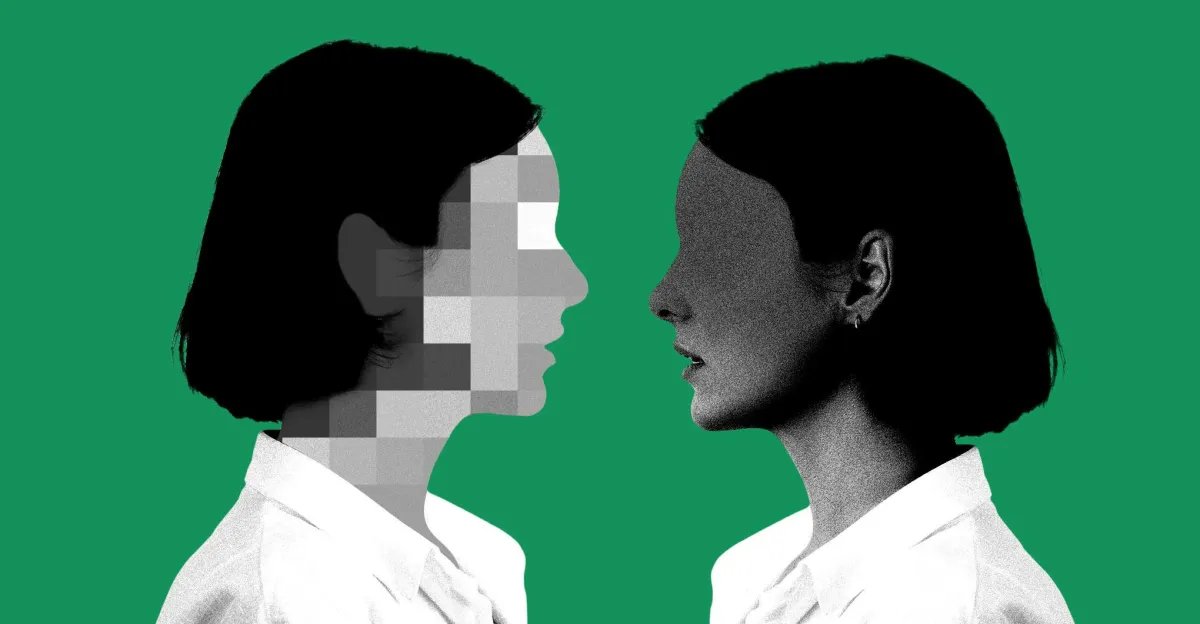
Digital twins are a relatively new concept in physical health, both in medicine and sports. It’s a virtual model of a person built from various data points — labs, wearable data, images, genetic profiles, etc. —that is continuously updated over time. Once built, clinicians can then use AI to see how a patient might react to specific medicines or treatments by first “testing” them out on their digital twin. Theoretically, this could also help healthcare providers assess injury risk, predict disease progression, and implement preventive care while minimizing adverse effects for the actual patient. The thought is that this could one day help realize the dream of personalized medicine. Metabolic coaching is perhaps the lowest-stakes, highest-reward version of this technology that can be tested in the real world now.

my The metabolic twin was “born” in June with a giant box from Twin Health delivered to my doorstep. Twin Health is a digital twin program to help people “heal” their metabolisms (eg, lose weight, manage diabetes, sleep better, etc.). It’s not available for widespread download just yet. Digital twins are still experimental, and currently, this service is only accessible through corporate or private health plans. It’s typically aimed at people with chronic metabolic issues. Twin Health provides everything you need to build a digital twin. Building mine would require 90 days’ worth of Dexcom G7 CGMs, a smart scale, a smart blood pressure cuff, three bottles of multivitamins and magnesium glycinate, and my Apple Watch. That was followed up with a trip to Quest Diagnostics, where a phlebotomist stuck a needle in my arm and sent vials of my blood for further analysis.
A few days later, I hopped on Zoom with my Twin Health coach Amanda — a human — and a doctor to review my lab results. Several numbers and formulas were thrown up on a shared screen. As it turns out, my liver? Inflamed, but understandable considering I’ve been diagnosed with a moderate case of nonalcoholic fatty liver. Insulin resistance — definitely there despite ideal HbA1c and fasting glucose tests. My pancreas is apparently working overtime, but my insulin-producing beta cell count seems fine. For now. My triglycerides were also high, though the rest of my lipids looked normal.
I knew going in that I inherited a bunk metabolism. A year of testing CGMs as a non-diabetic made that abundantly clear. But after the doctor logged off and Amanda asked me to define my goals, I launched into a game about my vague desire to reduce the number of medications I needed to keep my middle-aged metabolism functioning. Could a digital twin help me do that?
Maybe. For now, Amanda logged my goal, set up a follow-up call in two weeks, and encouraged me to try logging as many of my meals as possible for the first 30-day period. Once I hit the 90-day mark, I’ll be scheduled for another blood draw.

In many ways, I’m relieved my digital twin doesn’t have its own avatar. At least, not one that I can see. I’m glad for the abstract color labels. There’s novelty in going to see what color a cup of pineapple or a turkey hot dog with ketchup and relish might be. (Orange and green, respectively.) At times, I am reminded of Kazuo Ishiguro’s dystopian novel Never Let Me Goin which clones are raised as organ donors. The scenario is not a one-to-one comparison. An AI-powered digital twin can’t actually eat, die, or feel pain. I’m probably anthropomorphizing my discomfort with the idea of “testing” food on a virtual version of my metabolism, as if it were a jester-like food taster in a medieval court.
Still, as the months ticked by, I couldn’t help noticing how hungry my digital twin was. And how much that took from me, almost like I was getting drained each time I “fed” my twin. Building this thing takes an immense amount of personal data — even for me, someone who’s used to track and review a ton of health data. In my bimonthly check-ins with Amanda, she noted that tracking fatigue was Frequent feedback from Twin Health users.
My behaviors did change. Both in unexpected and expected ways. Anytime I have to log food, I end up avoiding unhealthy treats more often than not; I don’t feel like getting scolded by apps. That didn’t result in any meaningful weight loss, however. And despite my stated goal of tapering off medications, that ended up not working out quite as smoothly as I’d hoped.
I also didn’t learn too many surprises from my digital twin’s metabolic predictions. Although it was validating to see that for me, a bowl of soondubu jjigae and white rice is a solidly green or orange meal, depending on if I’m active after eating. (Take thatlow-carb diets. You can pry rice from my cold, dead hands.) I’ve tested far too many CGMs and AI nutrition apps to feel surprised by these insights, though I think it’d be useful for people new to metabolic issues.
Twin Health’s bimonthly check-ins did Motivate me to get back to training. I’ve always been disciplined in my fitness routines, but the extra accountability of having to state my progress aloud to another human — one who isn’t family — kicked my inner overachiever into gear. After months of feeling too weak from medication side effects, I recently felt strong enough to run an uninterrupted 5K. I’ve also gotten back to strength training with some cajoling from Amanda.

But most importantly, after 100 days, my follow-up labs came back with marked improvements. Amanda says my metabolic health score has jumped by nine points since joining. A year after my doctor’s eyes bugged out at my liver enzymes, all but one are back to normal. These numbers were slowly improving before I tried this whole digital twin business, but they fell faster while trying this whole thing out. My triglycerides dropped by 70mg/dL. There’s been a significant drop in my hs-CRP, which is a biomarker for overall inflammation. I’m still insulin resistant, but less so.
I can’t really argue with results like that, can I?
I can, actually. The concept of a digital twin is based on trust. As I said, metabolic use cases are high-reward and low-stakes. If you feed a twin an immense amount of data for losing weight, diabetes management, or more nebulous goals like “better energy” or “better sleep,” failure isn’t immediately life-threatening. There are medications and other avenues to try.
Personalized medicine is a different beast. Researchers are looking at digital twins for things beyond metabolism. One area currently being explored, for example, is cancer care and research. There’s massive potential there, particularly when you consider how grueling chemotherapy can be, but also huge challenges. The burden of trust for data privacy, for one. Digital twins are hungry for data, and their accuracy depends on a continuous stream of high-quality and sensitive information about you. That then informs future decision-making. If I felt overwhelmed by three months of logging in a low-stakes environment, how will that translate to higher-stakes scenarios? How does a digital twin exist once treatment is concluded? How does that data “live on” if treatment is unsuccessful?

As for me, I’ve decided my digital twin will get to “live” for another three months. Despite my lack of success so far, I haven’t given up on the idea of tapering off some medications. I could also use all the help I can get in getting my liver labs all the way back to normal. Amanda also says I don’t have to be as militant with the data for my twin now that I have a solid foundation. Again, lower stakes mean more flexibility.
So, today, I’m asking my digital twin what it thinks about a protein waffle with a tablespoon of peanut butter and some honey, with a side of pineapples. Orange, but again, I can turn it green with a walk.